The introduction to and first part of this list (#84-51) can be found here - please at least read the intro before skipping to the end. Part 2 of the list (#50-21) has some banger games on it too.
But here we finally are - the top 20 RPGs I've played!
THE LIST, CONCLUDED
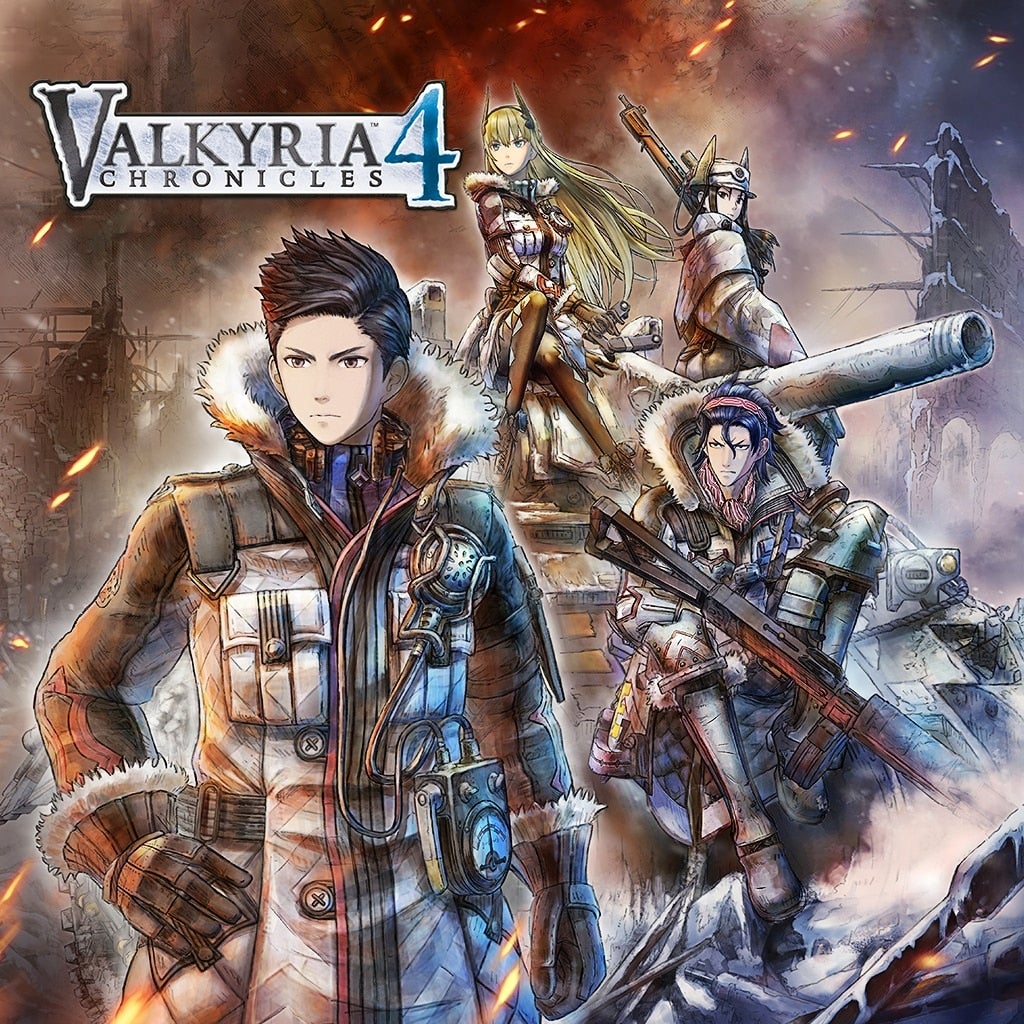
20) Valkyria Chronicles 4 (Sega/Media. Vision, 2018)
Subgenre: TRPG
Played: 1 year ago
Memory of it: Pretty Good
If you told me when I started this project that Valkyria Chronicles 4 would make my top 20, I would have laughed at you. But more time I spent editing this list, and the more I thought about how much I enjoyed this game vis-a-vis Persona 5, the more I had to admit: as much as it infuriates me, I really liked Valkyria Chronicles 4.
I’ve gone back and forth about which version of Valkyria Chronicles is superior. VC4 ranks pretty closely to the first one (see Part 2) because it has a near-identical core experience to it, and that’s a good thing! The team-building and permadeath aspects are as compelling as the original, and the battles are just as spectacular, if not more so. I think more of my favorite fights in the series are from VC4.
But let’s get the feminist killjoy critique out of the way, because holy shit, this game warrants it. Halfway through the Valkyria Chronicles series, Media Vision got involved in its development, and if you’ve been reading my reviews of the Digimon Story games, you know that they aren’t always great in the gender department. Minerva's breast physics undermine one of the game's most interesting characters. I love Kai but her outfit is ridiculous (a poncho that is cut in just the right spot to showcase her ass in very tight pants like come ON at least try to make it less obvious). But the bigger issue is that her love interest, Raz, sexually harasses her early in the story, and while he starts the story as a grade-A asshole and definitely goes through an arc, his treatment of the women around him isn’t acknowledged as part of that arc. He ends up together with Kai before the end of the game and the whole thing feels gross.
But the fact that this game takes Raz, the world’s most recklessly insubordinate shock trooper, piece of shit misogynist, and overall biggest douchebag, and STILL, somehow turns him into my favorite character by the end of the game, speaks to VC4's storytelling chops. I literally never thought a game could make me hate a character more than I hated Raz and I had done a complete 180 by the series conclusion. I really don’t want to spoil the ending but when the game made me cry, it was because of motherfucking Raz! That's some real magic right there!
And beyond Raz, this story hit me way harder that VC1’s did. While I think I enjoyed VC1’s story despite its “typical trope-y bullshit,” the mission of VC4’s Squad E (which changes halfway through the game in a mortifying way) is way more grounded and is a far more interesting source of drama than the mission of VC1’s Squad 7.
So while I still recommend VC1 as the waaay less sexist installment, VC4 offers slightly better battlefield thrills and a shockingly good story. What a ride.
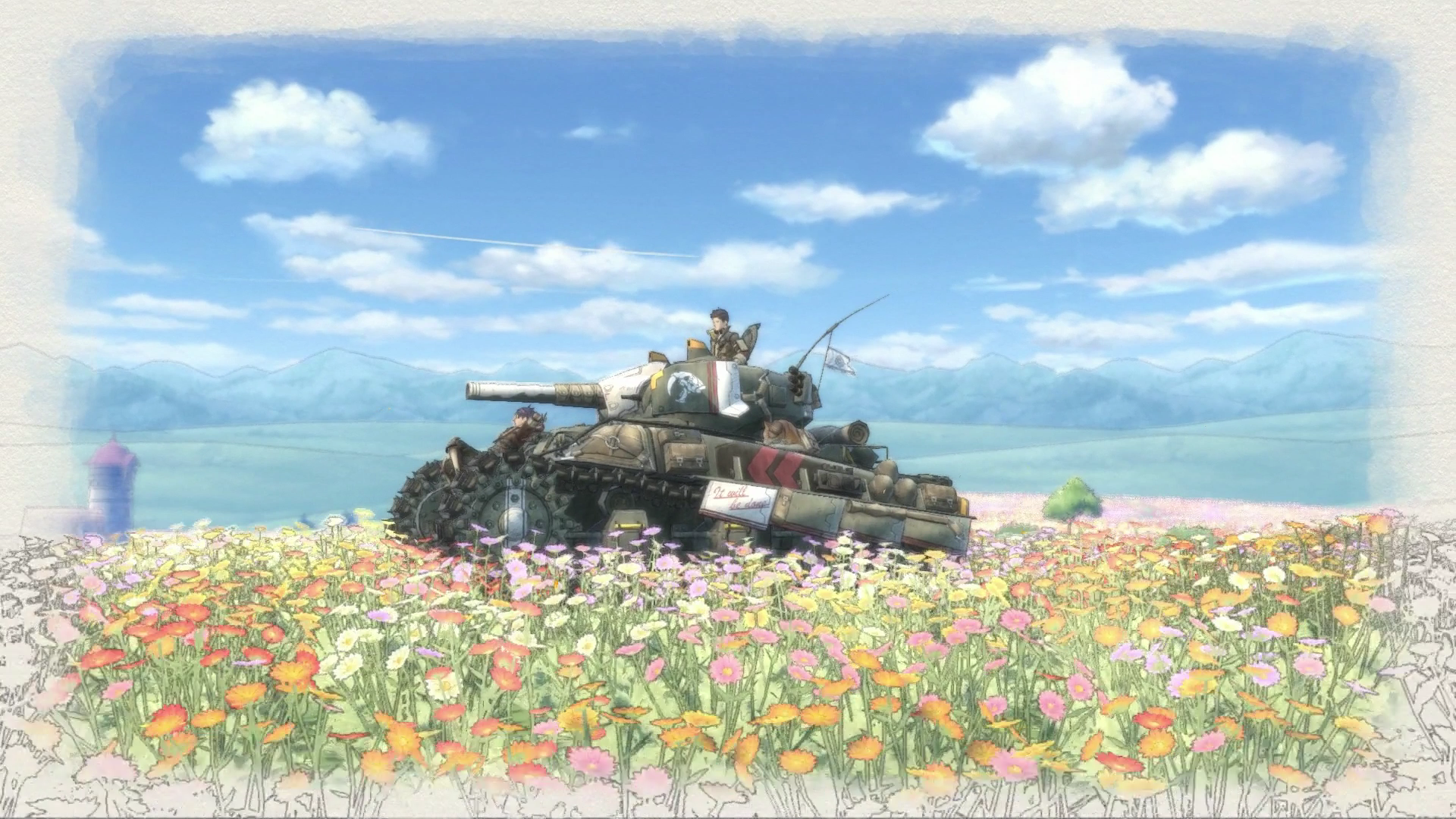
Also, have I not talked about VC1 or 4's art style yet? These games look so good!
When I submitted my top 3 GOTY list to the Sockscast last month, I had FF7 Rebirth and Time Stranger as my #3 and #2 games I played that year. That was a mistake. VC4 was hands-down the second best game I played in 2025.
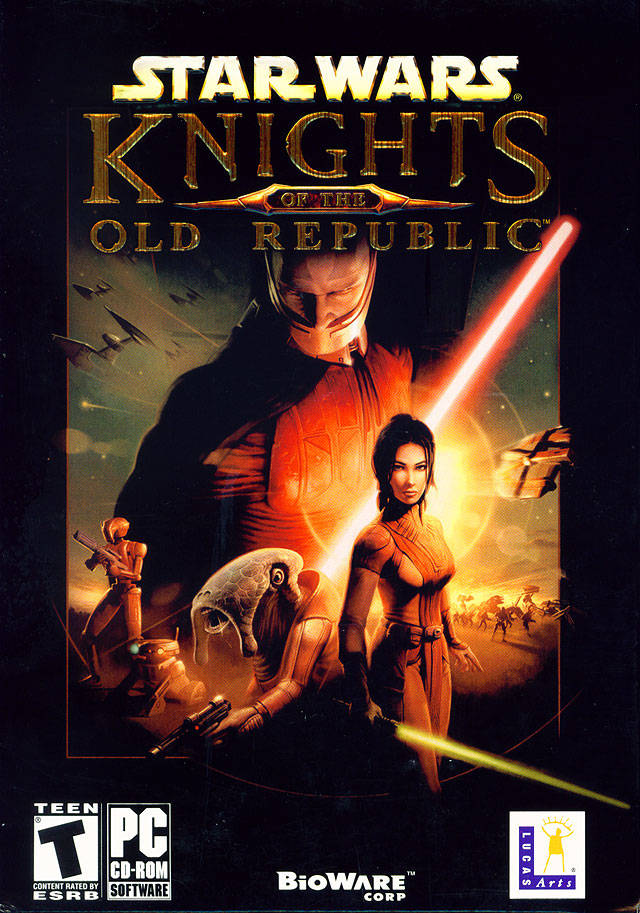
19) Star Wars: Knights of the Old Republic (Bioware, 2003)
Subgenre: CRPG
Played: Repeatedly, from 12-22 years ago
Memory of it: Pretty Good
“Translation: He requires proof of good faith. We must make a contribution to his people that shows we are not a threat. Shall I blast him now, master?”
When I was in elementary school, my dad, my brother, and I all played a fair amount of Jedi Knight II: Jedi Outcast, which was a formative action game for me. So one Christmas, my brother gifts me Knights of the Old Republic, and I expected it to be same the sort of Star Wars experience. So, when it wasn’t, I was flummoxed. Why couldn’t your character jump? Why did combat happen in turns? What were all these numbers on the screen? What was up with all of these dialogue choices? WHAT THE HELL WAS A FORTITUDE SAVE? I was hooked, my mind was blown, and a gateway into the genre of “computer/classic/western” RPGs was opened.
While KotOR II is the smarter, cooler game, it is the original KotOR that still feels more to me like an all-time classic. The cast is iconic, the story is well-told, and, most importantly, the game is actually complete (sorry). KotOR I is dumber, but it resonated with me more deeply on an emotional level, and that counts for a lot!
There are so many parallels between this and Bioware’s sci-fi successor, Mass Effect, that if you are a Mass Effect fan who hasn’t played KotOR, then I strongly recommend going back and experiencing this classic.
Speaking of…
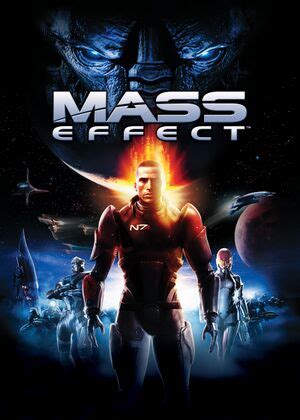
18) Mass Effect (Bioware, 2007)
Subgenre: Action RPG
Played: At least 5 times, from 6-18 years ago
Memory of it: Fresh enough
It’s hard to rank the Mass Effect trilogy in terms of its three component games – moreso than most series, the whole really is greater than the sum of its parts.
The original Mass Effect takes everything I loved about KotOR and cranks it up a notch – by which I mostly mean they surpassed KotOR’s cast with one that is even more iconic (Wrex! Tali! Liara! Garrus!), but I also think that Mass Effect is thematically richer with its numerous socio-political subplots. I have replayed this series from start to finish at least three times, which meant that I’ve replayed Mass Effect 2 at least four times, which means I’ve played ME1 at least five times. I have spent so much time in this world.
It is funny that, when it came out, Mass Effect felt like this standalone RPG masterpiece, but today, it feels more like a dated and awkward (but necessary) prologue to Mass Effect 2. ME2 and 3 still feel timeless, but ME1 definitely feels like a 2007 video game. Not that I mind!
17) Space Funeral (thecatamites, 2010)
Subgenre: Turn-based RPG
Played: Twice, ~13 and 15 years ago
Memory of it: Hazy
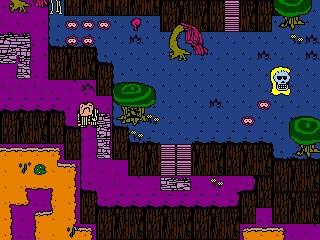
For those unfamiliar, Space Funeral is a freeware indie RPG classic whose main legacy is in its humor, alternative artstyle, and rejection of RPG norms. You play as Philip, a boy in pajamas, and his companion Leg Horse, a horse made out of legs, as you navigate through a bloody, crude, MS-paint-esque world to reach the City of Forms.
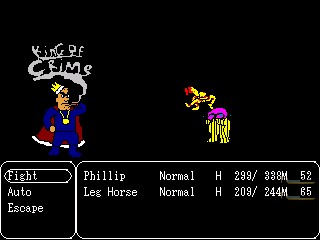
Space Funeral set the standard for weird, funny, short, crude, non-anime RPG Maker games. If thecatamites hadn’t made a game like this, someone else would have done it eventually, (and I wouldn’t be surprised if someone else had, in fact, done it first and had their work lost to history). Nonetheless, it is an important work that absolutely expanded my understanding of what an RPG Maker game could be and, more broadly, how to tell jokes through games. When I showcased games in the late 2010’s, people would ask me, all the time, “was such-and-such inspired by Undertale?” (sometimes the game preexisted Undertale) or less frequently, “was such-and-such inspired by Earthbound?” (I had not yet played Earthbound). To the contrary, it is to Space Funeral and OFF that my creative voice in that era owed the greatest debt to.
16) Facets (John Thyer, 2018)
Subgenre: Turn-based RPG
Played: 3 years ago
Memory of it: Pretty good
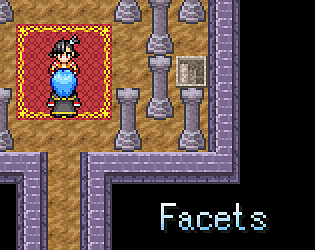
At the start of this blog post, I mentioned that I wouldn’t write about games made by people I know except for one game that hits well above its weight class. Some of you reading probably already knew what game I was talking about, but for those of you who didn’t, that game is Facets. Any version of this list without Facets on it would be a crime.
You play as a team of “dream divers” who infiltrate a woman’s mind in order to shape her into a model citizen. In order to do this, you must destroy facets of her personality, represented by a gauntlet of 10 tightly designed bosses, which are the only enemies in the game. (Yes, you are the bad guys, and no, this story does not have a happy ending.)
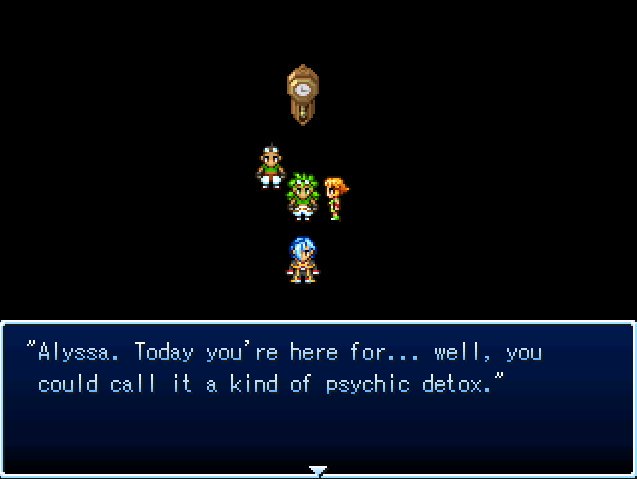
The game takes cues from the survival horror, meaning that healing items are non-renewable, so you must carefully manage your resources over the course of your playthrough or risk botching your entire run. (Don’t worry, there are difficulty settings and a walkthrough to help you get through if you need it. I’m pretty average at these sorts of games and still got through Facets on my first attempt on the default difficulty with a little help from the walkthrough at the very start to get me in the right mindset).
The fact that the game uses stock RPG Maker 2003 assets and STILL makes it this high on the list should speak for itself. Heartbreaking writing and incredibly tight boss design. Facets is an impressive subversion of its genre and an absolutely punch to the gut. I was in tears. Playing it was an honor. Thank you again, John.
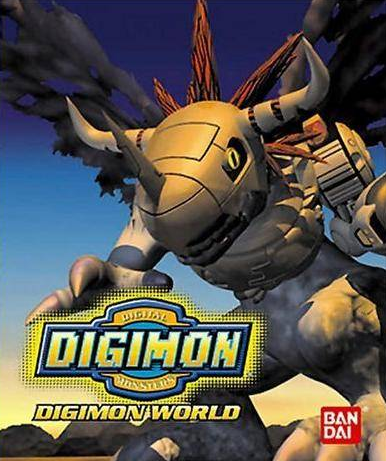
15) Digimon World (BEC, 1999)
Subgenre: Virtual Pet JRPG
Played: Dozens of times over the past 2-24 years
Memory of it: Picture perfect
As I mentioned earlier in this list, I have always been obsessed with Digimon. When I was a kid, I would go to the nonfiction section and find the strategy guide for Digimon World 2 – a game I had never played – and read it from cover to cover.
Some time later, my dad brought me to a Gamestop, and I checked the used games shelf for Digimon World 2. I couldn’t find it, but I resigned myself to bring home the original. I booted it up in the Playstation, not knowing what to expect, and was surprised that the game I was playing bore no resemblance to the sequel described in the strategy guide. You explored an island with a single Digimon partner that grew from a baby to adult and died over the course of about 14 days only to reincarnate. No matter where in the game world you were and what you were doing, you had to feed your Digimon, put it to sleep, and take it to the bathroom at regular intervals.
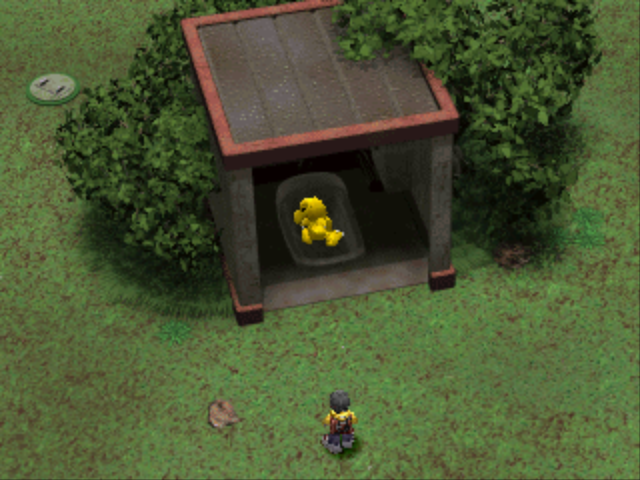
And it was a buggy, poorly translated mess that did not explain very well how any of its systems worked. But the game was also filled with secrets – for that matter, discovering secrets and being genuinely surprised was the whole point of the game! But it was also hard as hell, especially for an elementary school kid.
At that age, I had finally discovered GameFaqs and consulted it religiously, but the problem was that nobody else actually knew how the damn game worked either! Information was often missing or straight-up false. The game’s raising and evolution mechanics wouldn’t be fully mapped until modders dug around in the game’s innards in the 2010’s. I remember someone had to perform actual in-game science experiments to determine what missteps in monster raising counted as formal “care mistakes” and which ones didn’t.
It took me over a year of effort, playing the game regularly, before I rolled credits for the first time, wandering around the same areas over and over again in futility, trying and failing to raise powerful monsters over and over again, months and months passing by before I realized that I had missed an entire eastern half of the island that I was supposed to discover in the first half of my run.
Beating Digimon World for the first time as a child with incomplete and inaccurate information on the internet was an experience that will never be replicated.
But then the game would continue to grow with me well into adulthood. To this day, every time I replay the game, I encounter something new that I hadn’t encountered before. A new evolution or move I had never unlocked before, or a new incredibly rare food spawn. It has been a delight watching fans finally map out all of the game’s obtuse inner workings and playing through the game with a new understanding.
There is no game I know more thoroughly than the original Digimon World. Its DNA is littered throughout my own work – Digital Toilet World and Monsterpunk are direct homages to it, but elements of it have also found their way into The Void Hero Blues and Jailbird Nocturne. It is probably my favorite game of all time, so finding an honest placement for it on this list was a challenge.
Okay, so I have a lot of nostalgia for Digimon World. Sure. But why is it this high on the list? Why is it that every fan who’s made a video essay on this game holds it with the same reverence that I do, referring to it as a cult classic or all-time fav?
The first reason is its charm. The game’s pre-rendered backgrounds are gorgeous and creatively conceived, defined by a fusion of oversized electronic equipment and natural space. File Island is straight-up one of my favorite game worlds of all time. I mean, just look at these. These are easily as gorgeous as anything Square was doing at the time:
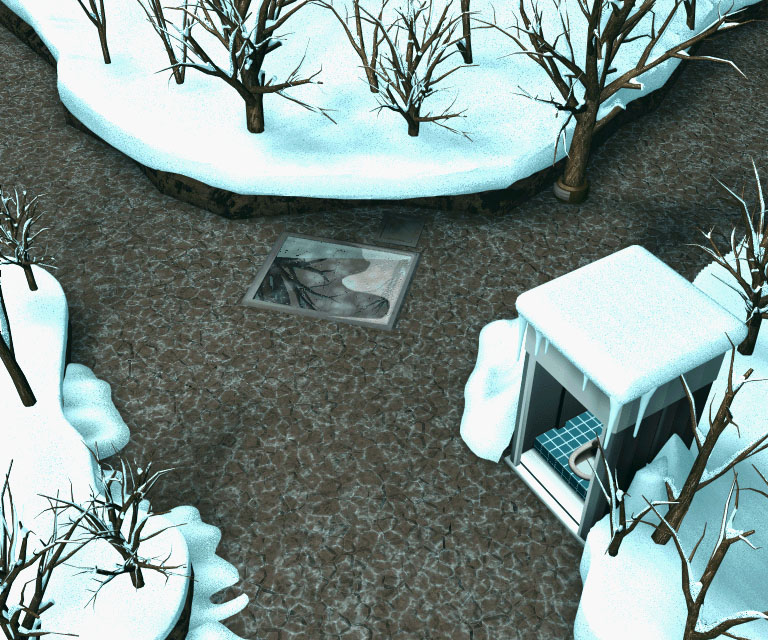
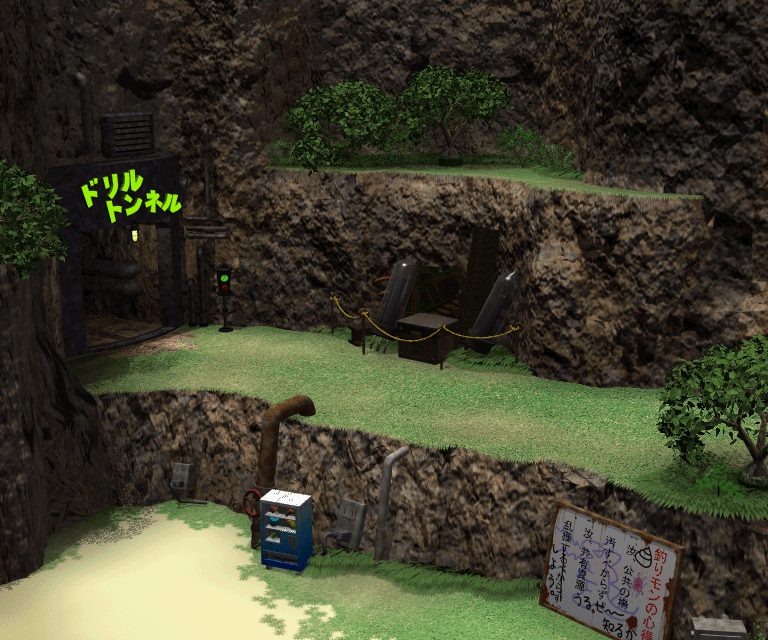
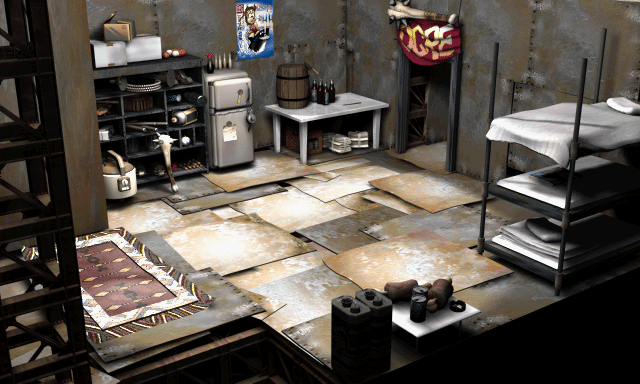
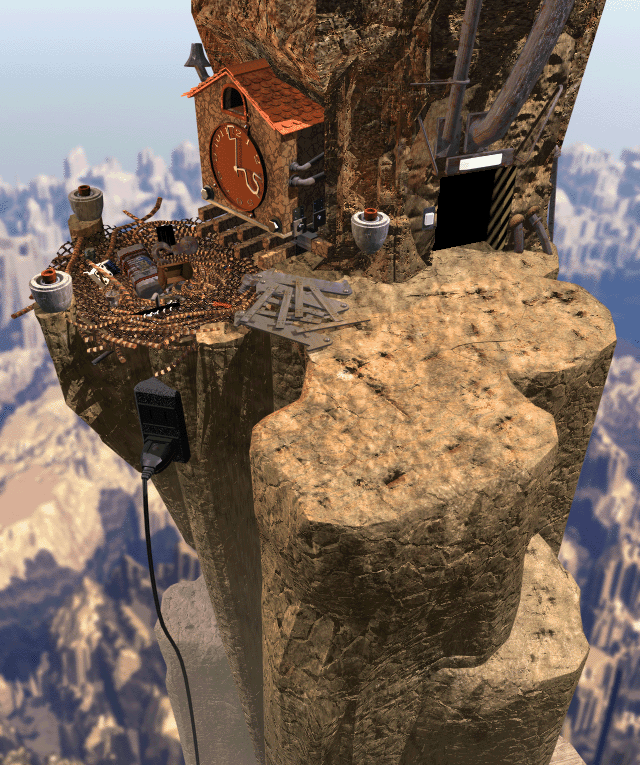
The monster animations are cute. The dialogue is irreverent. The worldbuilding is playful and erratic. While nearly every other game that followed bearing the “Digimon World” title would turn out to be slop, the original game feels like a creative labor of love (don’t quote me on this, but from what I understand, the creative team changed between World 1 and World 2, and it shows)
The game absolutely nails how it handles exploration. This is partly done through the game’s set-up: the Digimon on File Island are losing their memory and speaking ability, and it is up to the player to find them, return them to their senses, and send them back to the city. There are roughly 50 recruitable Digimon, and when you recruit about half of them, the game’s final dungeon opens, and you can finish the story.
Compared to most open-world game set ups, this one is really clever! For one thing, there’s no dichotomy between a main quest and side quests – the side quests (the recruitable Digimon) ARE the whole point of the game, putting exploration front and center and making every discovery meaningful. This seems like it should be open world game design 101, but it isn’t! (I know I'm starting to sound like a broken record, but its absurd to me how underdeveloped open world game design is given its popularity.)
But the cool thing here as well is that you aren’t required to find every recruitable Digimon to complete the game. This means that every playthrough of the game is unique, players replaying the game are making genuine decisions about which monsters to go for this time around, and finishing the game doesn’t feel like you’re working through a shopping list of mandatory items. You can accomplish the goals that most interest you.
But wait, there’s more! The game world isn’t arranged in an omni-directional grid, like most 3D open-world games, but instead as a loop of set screens with a few branching dead-ends. This is genius because it establishes boundaries to the exploration (go clockwise or counterclockwise), but still presents the player with 2-3 clear choices of where to go. And because the choice is bounded, the player is guaranteed to encounter something of interest with every new area they discover.
And I haven’t even talked about how wonderfully diverse the “recruitment quests” are! There’s a lot of standard RPG “go here, fight this boss” to be had, sure. But some of the other recruitment requirements for Digimon are so creative! Beat a penguin at curling! Fish a sea serpent out of a lake to meet some gym rat insects! Water a plant! Find nine items requested by merchants! Earn record profits while working part time at a store! It feels so refreshing, and it requires you to dabble in all of the games systems, even the less essential ones like fishing and card collecting.
The game’s time management mechanics are compelling. Your partner’s limited lifespan requires you to make careful decisions about how long to train your monster in the city, when to explore the island, and how well to stock up on items before setting out. It’s a compelling loop that requires some frankly existential decision making. Time of day and time of year also affect what NPCs and events are available for you to interact with. This game takes its clock and calendar as seriously as anything else I’ve ever played.
All of that praise given, there’s a reason this game has a cult following at best. The gym training mechanics are tedious, player progression is atypical, the translation is laughably bad, and combat is mostly uninteractive (although I would argue that this is the point, but I’m trying hard to keep this discussion brief). Digimon World is charming and a fascinating piece of game design, but it is really hard to recommend to anyone who isn’t a Digimon fan with an open mind.
Games are not standalone artifacts – they are experiences that exist between the player and the software. The version of Digimon World that is the fifteenth greatest RPG I’ve ever played is the one that I first experienced as a child in the early 2000’s with a specific amount of online (mis)information available to me. Is it possible for anyone, adult or child, to have a similar experience in 2025? I don’t know.
But, for those willing to take the plunge, here’s how I recommend you play Digimon World:
1) By default, play the game blind
2) Don’t look up a recruitment guide until you’ve explored every screen available to you and you genuinely have no idea what to do next
3) Don’t look up an evolution guide for rookie and champion level Digimon until you’ve evolved your first Numemon or you’ve evolved into the same champion Digimon twice.
4) Don’t look up an evolution guide for ultimate level Digimon until you’ve unlocked Mt Infinity or you’ve entered Factorial Town.
There is so much more I want to say about this game – I really could write a book on it – but we have 14 more good games to talk about.
14) Final Fantasy VII Remake (Square Enix, 2020)
Subgenre: Action JRPG
Played: ~4-5 years ago
Memory of it: Fresh enough
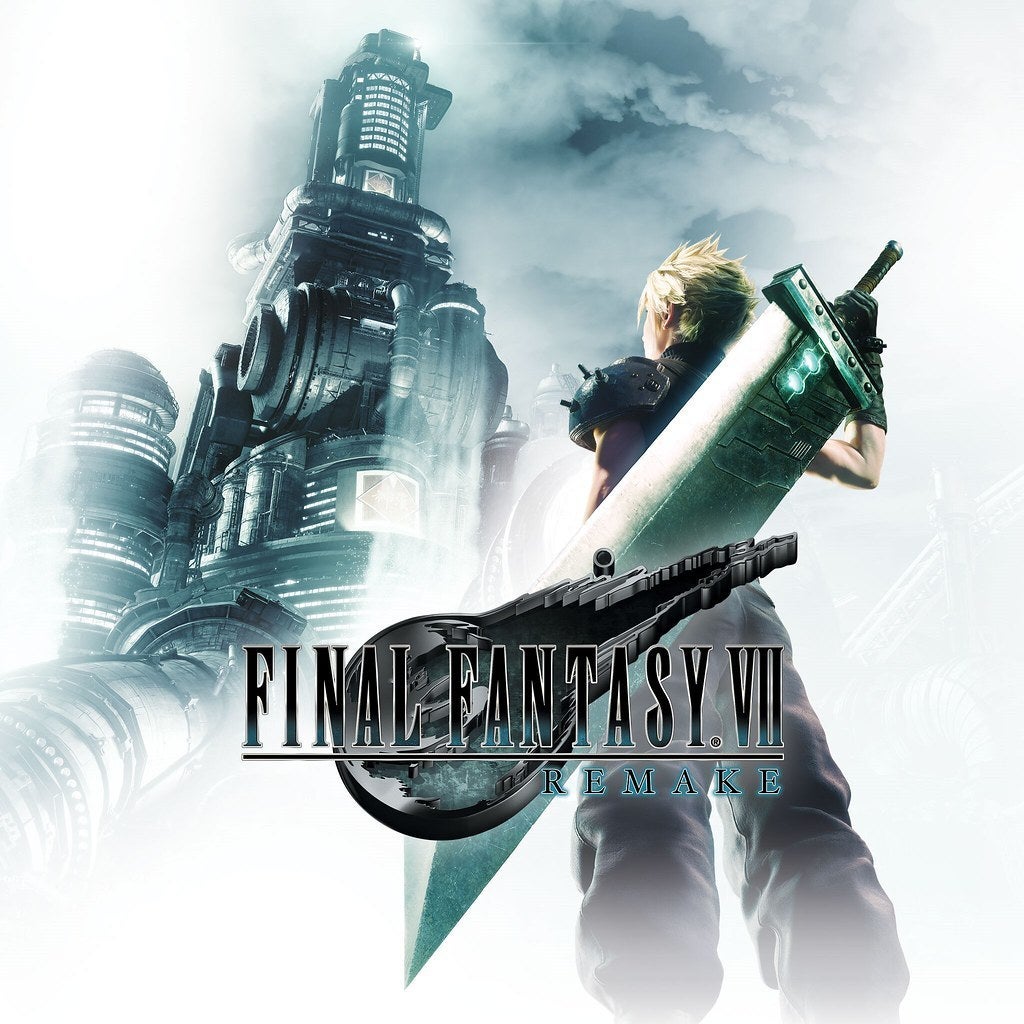
Most of my thoughts about FFVII Rebirth’s combat, story, and spectacle (see Part 2) carry over to its predecessor, Final Fantasy VII Remake. I love how these characters are portrayed in this series, the combat is fun, the game is so damn pretty, and everything about it feels like a labor of love.
However, most of my issues with Rebirth’s storytelling didn’t rear their heads in Remake, and most importantly, Remake is a relatively focused linear experience that feels driven and is unbound by open-world bloat. In fact, I loved the way the game handled its side quests – there are only three points in the story where you take a break to do them, and they happen at points where it makes sense for the party to shift gears. The fact that Remake is such a well-structured, well-paced game made playing through Rebirth all the more painful. Nomura, if you're reading this, please give us a linear, focused third installment in the remake trilogy. Please.
13) Final Fantasy X (Square, 2001)
Subgenre: JRPG
Played: 3 years ago
Memory of it: Fair
Everybody cries during Final Fantasy X’s credits.
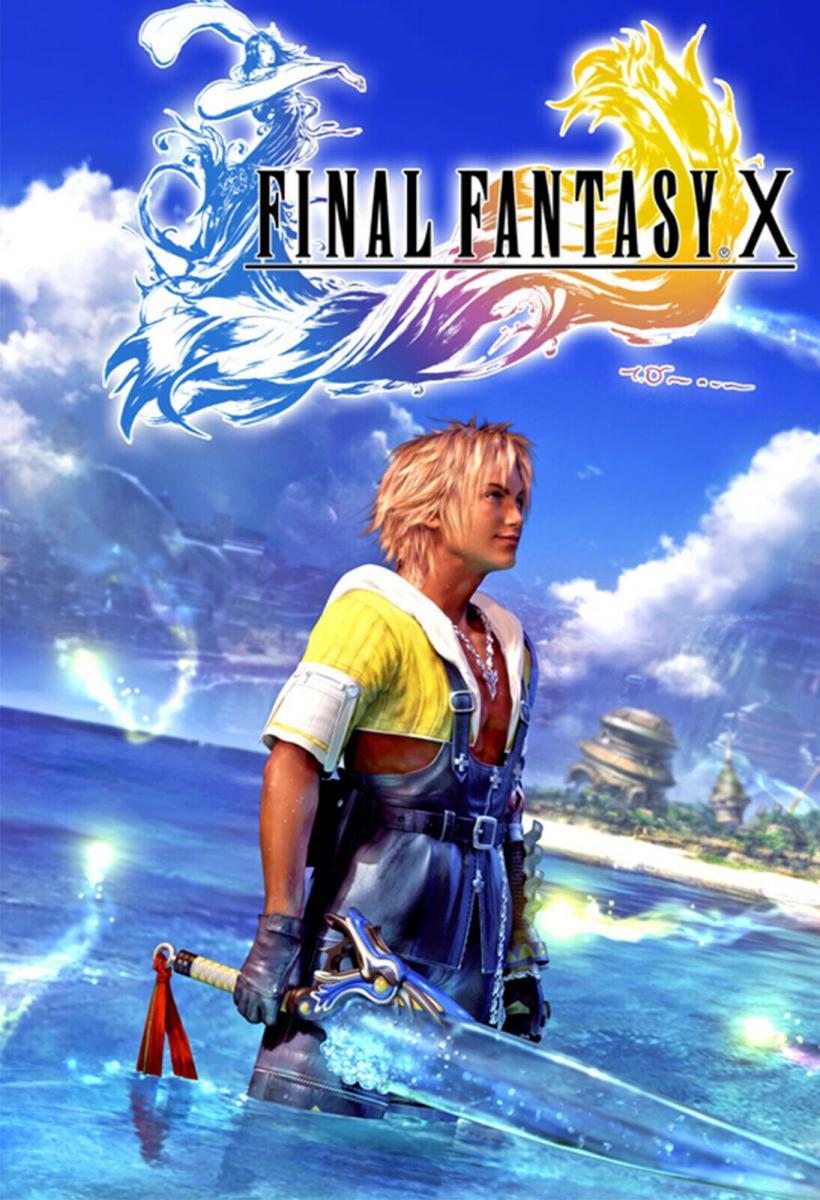
Final Fantasy X does simple things well. Its battle system feels like one of the more simplified ones of the franchise – like Pokemon, which party members you have out matters more than what actions you choose or what gear you equip to them – but it’s executed real well. The story is fairly simple – boy meets girl, boy is the only one who doesn’t know girl is about to die, boy learns that girl is about to die, girl doesn’t die, boy learns that he is about to die, girl doesn’t know boy is about to die, and the boy dies – but it’s executed real well.
So I’m really not sure how I feel about FFX. It hit me hard when I beat it, it deserves its status as a classic, and I definitely won’t argue against anyone who says that this is the best Final Fantasy/JRPG/RPG of all time, as many do, but as time’s passed, it also feels like there isn’t as much meat there for me to dig into as there are in other entries in the series.
But, hey, I now tear up whenever I listen to “To Zanarkand,” so that's a sign of an all-time great game right there as far as I'm concerned.
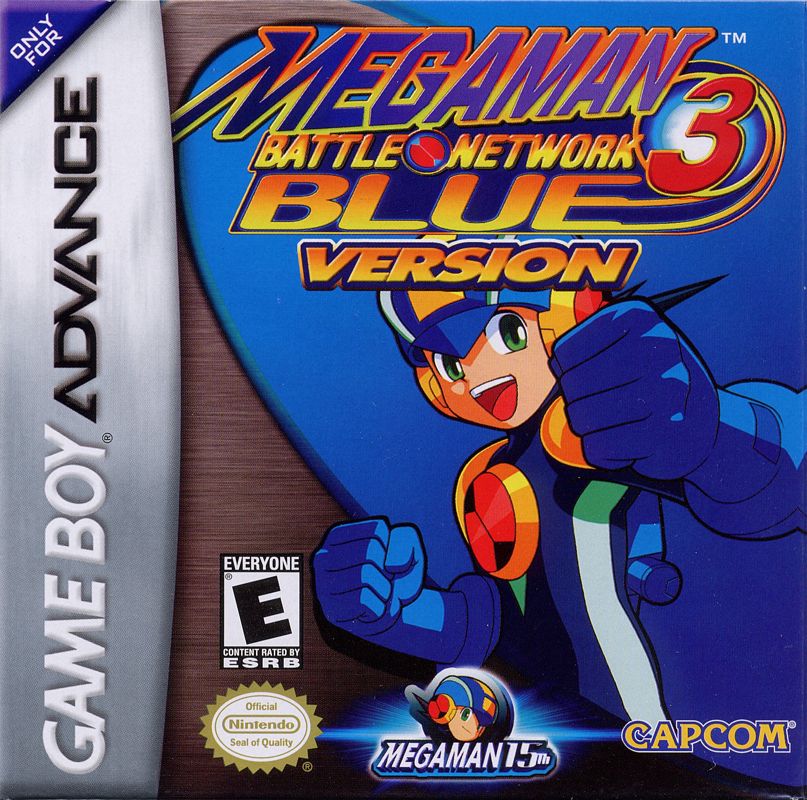
12) Megaman Battle Network 3: Blue Version (Capcom, 2002)
Subgenre: TRPG
Played: Countless times, from 2-22 years ago
Memory of it: Fresh
What a masterpiece.
The Megaman Battle Network Series is essentially two trilogies – BN4-6 have their own art style, gimmicks, and narrative thread, while BN1-3 have theirs. So despite being the series’ middle entry, BN3 is the first of the series’ endings. And what an ending it is! You have the final climactic showdown with Bass that's been promised since BN2, sacrifices are made, and the last boss is a manifestation of the internet itself!
BN3 was the only game in the series I completed as a child, and I must admit, it set a high bar that none of the other entries could quite reach. BN3 has some of the best writing in the series (a low bar, sure), touching on some heavier themes (e.g., this game actually digs into Chaud’s character and explores his emotionally abusive relationship with his father, and then never visits the topic in the series ever again!) and it has my favorite representation of the seedy, dark, and dangerous Undernet, which plays a major role in the story this time around. I don't normally care about post-game content, but BN3's is legendary - it's epic, ties into an unfinished subplot, and is easy to stumble into but an endeavor to actually complete.
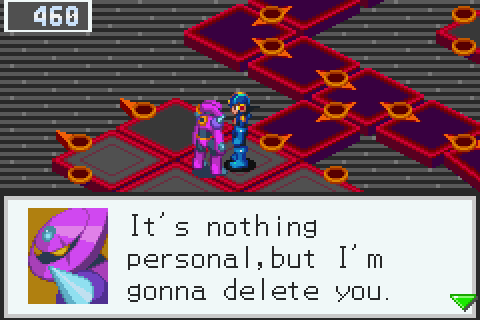
A staple of the BN series from the 2nd entry onward is that Megaman is able to change forms in battle. In BN 4-6, this takes the form of the Double Soul and Cross systems where Megaman adopts the powers of another Net Navi, but BN3 is the second and last game to use the style change system, where he gains special abilities and an elemental type that reflects the player’s play style. While the individual Souls and Crosses in later entries may be better designed, being stuck with a fixed roster of them depending on which version of the game you played was boring. By contrast, I liked that you could unlock almost any style in BN2 or 3, that it was a reflection of your playstyle, and that you never knew what form you would unlock next.
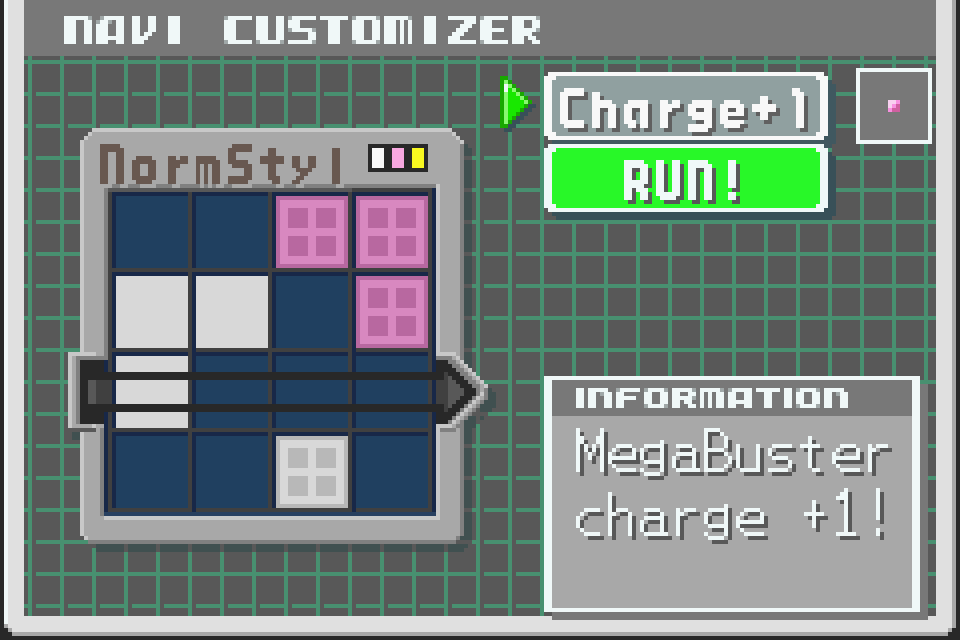
Oh, and this was the game that introduced the Navi Customizer! The Navi Customizer is one of the coolest progression/equipment systems in any RPG. Any upgrade you want to give to Megaman take the form of a polyomino that must be placed on a small grid – but there are rules that constrain where pieces can be placed. This is already cool, but MMBN3 goes a step further and allows you to break those rules, at a cost – they cause software glitches that may cause positive or negative effects to Megaman in battle! And that’s already really cool, but MMBN3 goes a step even further and allows you to open a secret console and type in codes that you gather from NPCs and in-game web forums to bypass specific error messages! It’s thematically appropriate and mechanically engaging and makes you feel like a computer engineer and is soooooo much more fun than just going into a menu and making your barbarian carry a sword.
But the main reason that MMBN3 is this high up the list – why any of the BN games are as high as they are – is that it has one of the most delightful battle systems of any game ever, as discussed in my BN4 review. When you combine that battle system with the best story and some of the best mechanics in the franchise, you get something special.
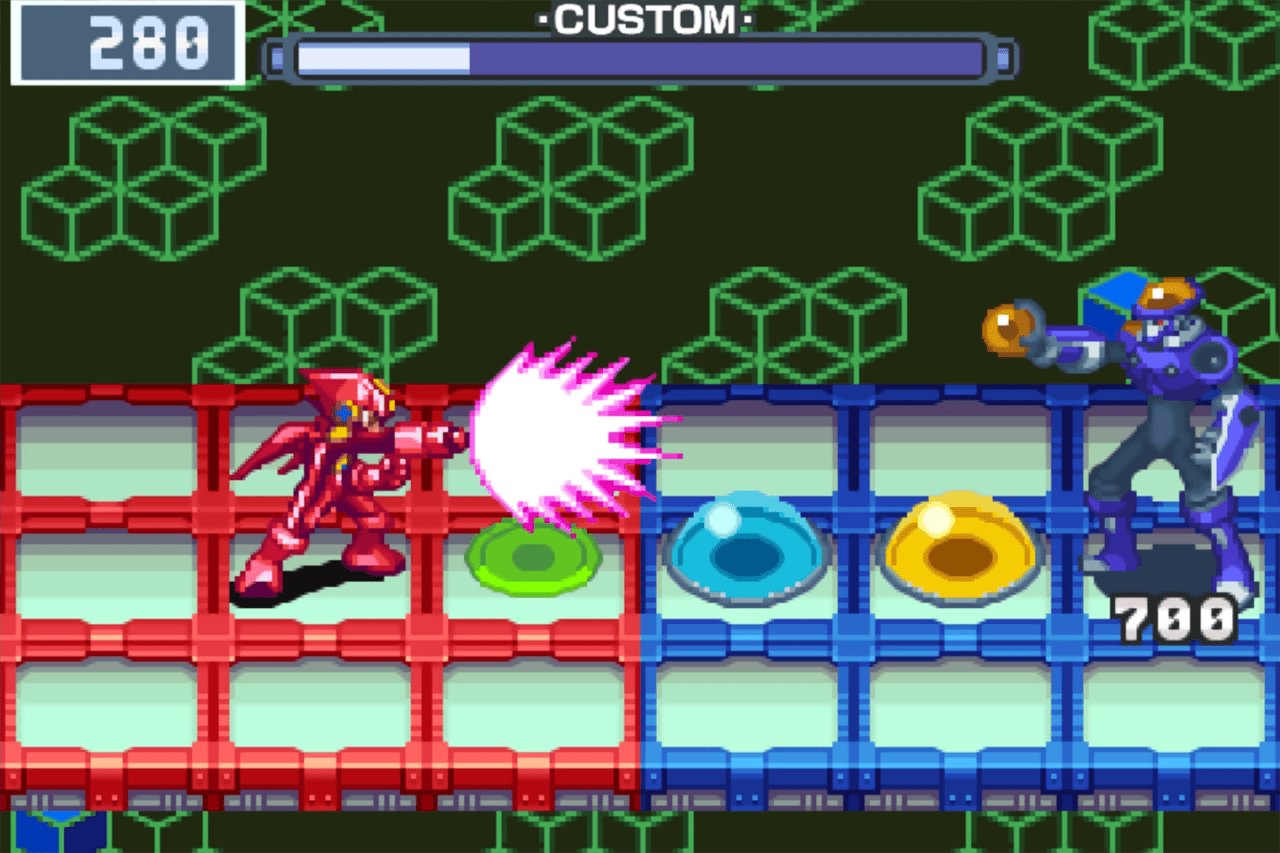
It’s not the deepest or most artistic game, but it is one of the most fun and best designed games I have ever played, and that counts for a lot. If you're a sicko about RPG battle and customization systems, you must at least play Battle Network 3. BN2's good too, but you can start with 3 and have a good time. Blue Version has an optional boss in it that White version doesn’t, and is the better version for first time players.
11) OFF (Mortis Ghost, 2008)
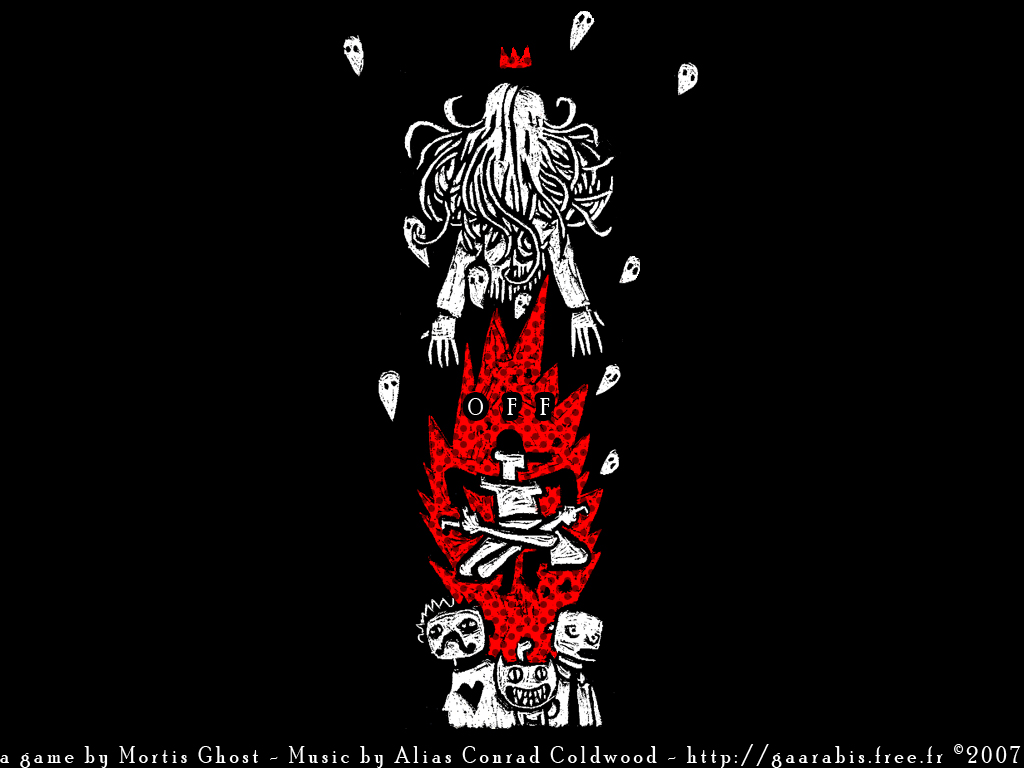
I wasn't sure whether to use the cover art for the commercial re-release or not, but then I found this wallpaper on Mortis Ghost's old website for the game, and I haaaaad to go with it
Subgenre: Turn-based RPG
Played: Two or three times, originally ~12 years ago
Memory of it: Fair
If you follow me on social media or have read this blog before, you’ve probably heard me talk about OFF.
OFF is a very French freeware RPG Maker cult classic in which you play as a man with a baseball bat who is on some sort of mission to kill ghosts (and do absolutely nothing else, wink wink nudge nudge). It absolutely turned my idea of what a turn-based RPG could be on its head. Its visuals, its music, and even its elemental system (plastic/metal/meat/sugar) were wildly divergent from JRPG norms.
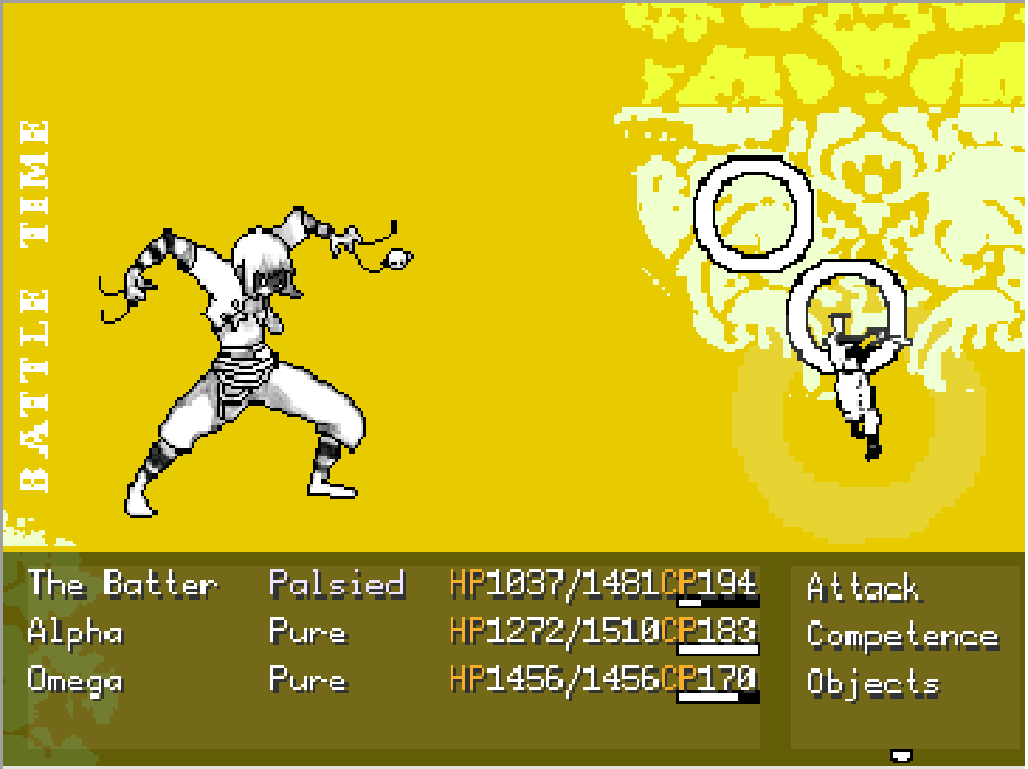
OFF’s original soundtrack is one of my favorite soundtracks in games. “Pepper Steak” is one of the most distinctive RPG battle themes of all time. “Flesh Maze Tango,” “Fake Orchestra,” and “Minuit à Fond la Casse” are all bangers. “The Meaning of his Tears” may be my favorite boss theme ever.
Many indie games around the 2010’s took a critical lens to the norms of game design, examining and exploiting the player’s willingness to blindly follow directions and enact violence, and OFF is absolutely one of those games. I feel like Undertale had the final word on compulsory violence in RPGs in 2015, and for that reason, I don’t know if OFF is as impactful now as it was pre-Undertale.
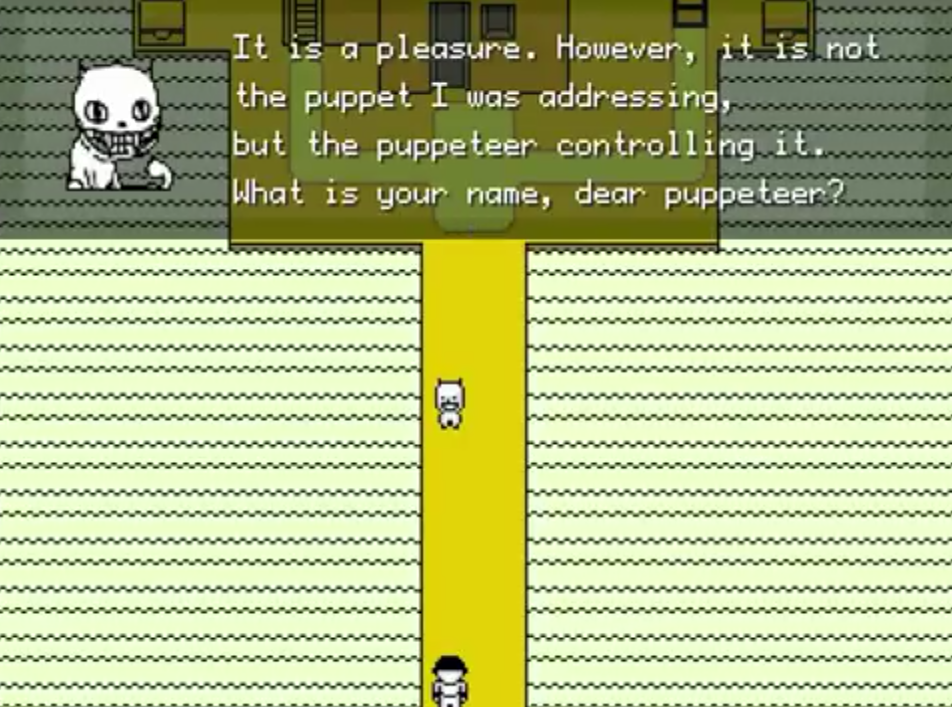
That said, OFF is absolutely essential reading for anyone who’s a fan of Undertale (even before Toby Fox confirmed OFF’s influence, I could smell it in Undertale’s DNA), and it’s strongly recommended for anyone who plays RPG Maker games. OFF is an important piece of indie game history and I will always advocate for its place within it.
But which version of OFF should you play? OFF was recently remastered and rereleased, and while I want to encourage people to buy that version to support Mortis Ghost, it features a new soundtrack that, while very, very good, is hard to recommend when the original game’s identity is so deeply intertwined with its music. Is OFF without “Pepper Steak” still OFF? I don’t know.
10) Pokemon Red/Blue (Game Freak, 1996/1998)
Subgenre: Monster-collecting JRPG
Played: Dozens of times from 26 years ago to the present
Memory of it: Picture perfect
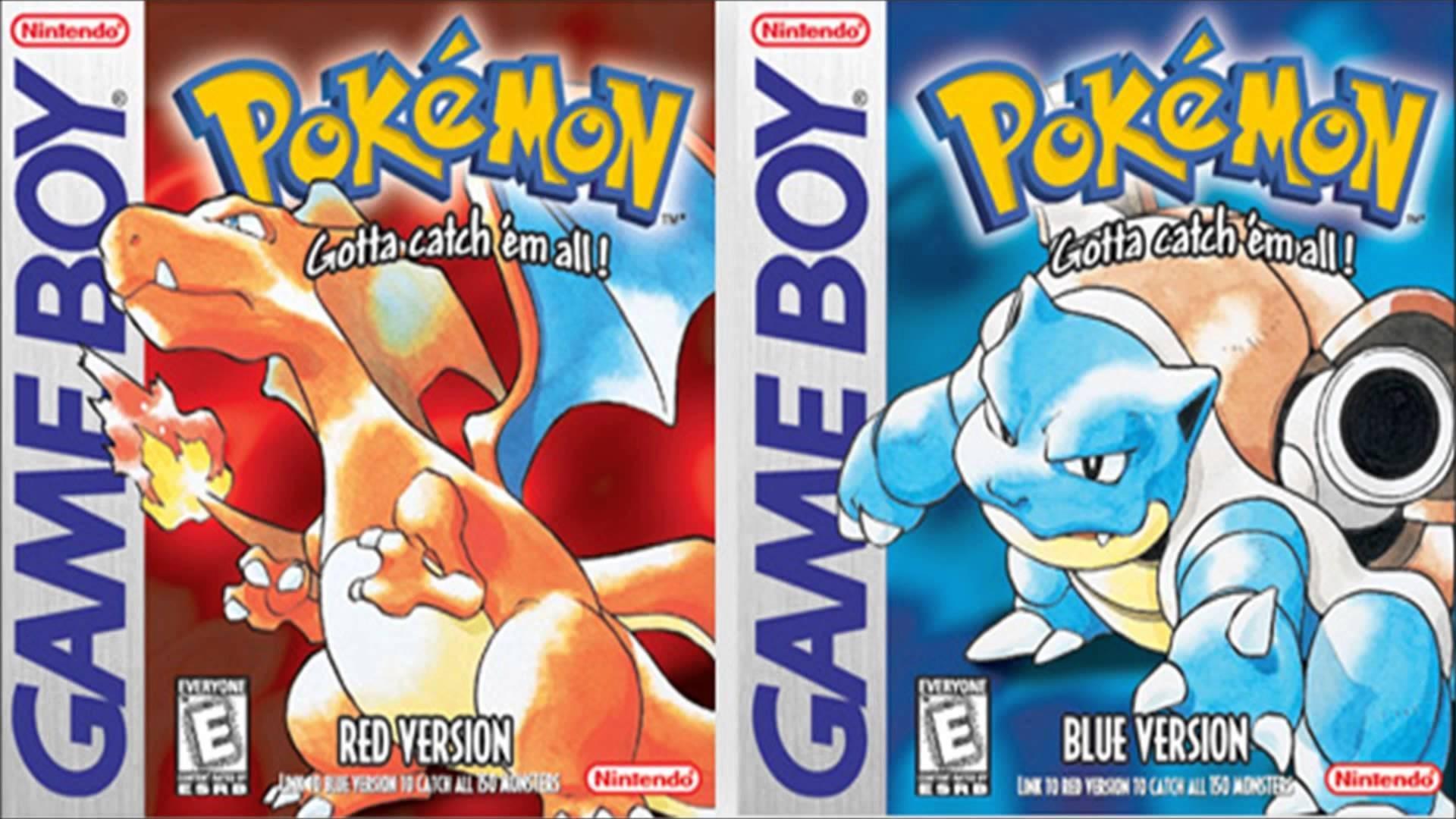
It’s 1999 or 2000. I’m 6 or 7. My older sister is playing Pokemon Red with her friend. I want in. I’m allowed to play, but I’m not allowed to overwrite her save. Sometime later, a Pokemon Blue cartridge mysteriously enters our household, and my Pokemon adventure begins in earnest.
I find the fabled secret house in the Safari Zone after days of wandering. I ask my sister to beat the Elite 4 for me. A boy on the playground shows me the Missingno glitch for the first time. I visit a kid’s house down the street just so we can throw down with each other with our Lv 100 teams, one of which somehow still lives on my Pokemon Blue cartridge to this day.
I’ve noticed that when most people, especially younger players, talk about Pokemon Red and Blue, they applaud it for establishing the series’ formula, but otherwise dismiss it as buggy, simplistic, and poorly designed. By contrast, I think Gen I does a number of things uniquely well that the series hasn't done as well since.
Mechanically, I think it’s great to see what Pokemon does with such a small palette of monsters and moves. While the game sometimes seems careless with its design (the Psychic type is notoriously unbalanced in this generation), at other times, it feels very deliberate in contrast to the more “sandboxy” future installments. The way that Viridian Forest and Brock’s gym teach the player about type matchups (and, for the Charmander players, the importance of STAB and the differences between special and physical moves) is so carefully designed. People who point to Onix as an example of “bad Gen I design” are missing the point – Onix isn’t designed to be a party member, but a boss. He’s a defensive wall whose attack stat is on par with a starter Pokemon’s because the point of Brock’s Onix is that the player is supposed to learn how to break through walls. Onix’s reappearance in future bosses – next with Giovanni, and finally with Bruno – serves as a benchmark for the player’s progress.
Hot take, but while some of Gen I’s flaws are bad for multiplayer, they actually make for a more interesting single player adventure! By giving the Psychic type no meaningful weakness, and locking the strongest pure Psychic type available, Alakazam, behind a link cable, the player actually has to find a creative way to beat Sabrina and the rival’s Alakazams beyond simply hitting them for super effective damage.
I’m not the first Genwunner to celebrate the openness of the game’s world, but it is a lot of fun to make decisions about exactly how to tackle Red and Blue’s campaign. I never fully appreciated the freedom afforded in this generation until I played the game alongside my partner (who had never beaten a Pokemon game before... and still hasn't) and found that we had somehow defeated Sabrina (Gym leader #6) before Erika (gym leader #4)
The monster and trainer sprites are so good in this Gen. By (or even before) Gen III, Pokemon had settled in its identity, and it was thematically and aesthetically blander than that of the games that had spawned the franchise.
Moreso than other entries in the series, this game makes a point to make you feel like a child in a not-fully-comprehensible world of adults. Plot threads and details about Cinnabar mansion and Team Rocket’s occupation of Saffron City, are implied but never stated outright. You hear hints about the past lives of Mr. Fuji and Professor Oak but aren’t given the full backstory. The books on the shelves are sometimes full of “complicated things that [the player] doesn’t understand!” Giovanni tells the player to “stay out of grown-up affairs, or experience a world of pain!” While the rest of the series gives the player a complete, objective, bird’s-eye understand of their worlds and characters, Red and Blue leave the player with unuanced and incomplete understandings of what is going on around them. The protagonist knows enough to know who the bad guys are, but do they fully understand why they do what they do and how they operate? Did the protagonist liberate Silph Co out of a sense of justice, or is it just that the Rockets are in the way of their Pokemon League challenge?
The story itself is simple, establishing the straightforward Pokemon League, Rival, and Evil Team plotlines that feature in the rest of the series. But out of the first four games, Gen I tells its story the best, placing the rivalry at the center and, appropriately, making the rival the final boss of the Pokemon League (and let’s not forget for those of us playing for the first time in 1999 that having to fight the League Champion after the Elite 4 was a genuine twist!). Gen II would disentangle these plotlines by sidelining the rival, and Gen 3 would totally fumble its rivals while making the Pokemon League feel anticlimactic following the relatively intense Evil Team plotline (a mistake Gen IV would repeat). It wasn’t until Gen V when Game Freak started to think more critically about how to better unite their subplots into coherent stories again.
I admit that nostalgia is probably a factor in my high placement of Red and Blue. I considered trying to be "more objective" and moving it down as far as entry #17, but that felt wrong, and I do think, no matter what, that Gen I is at least as much a contender for “best Pokemon game” as Gen V is.
I like some of the changes that Yellow Version makes, but replacing the monster sprites with anime-style art is a clear downgrade, and giving the player a Pikachu and all three starters flattens team composition, making it an inferior version overall. I almost ranked it separately (somewhere between #23-34 – I guess those monster sprites are doing a lot of work for me, huh?), but adding a separate entry for what is basically the same game felt gratuitous.
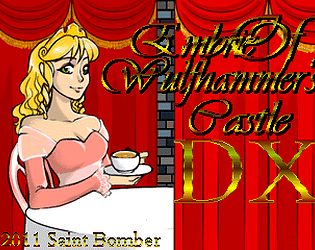
9) Embric of Wulfhammer’s Castle (SaintBomber, 2011)
Subgenre: Turn-based RPG technically, but all of the combat is at the very end
Played: At least once, ~12 years ago
Memory of it: Hazy
Embric of Wulfhammer is a freeware, indie, sexually-explicit comedic yuri adventure game where you play as the Duchess of Elstwhere, sent to Castle Wulfhammer to meet the man to whom you’re bethrothed, but you instead seem to find yourself in sexual and romantic encounters with all of the women in the castle. Huh.
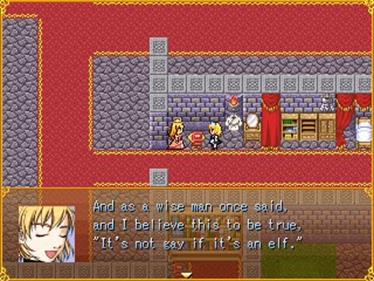
Sorry for the JPEG, but I did a quick image search for screenshots and this was my favorite.
Despite (or in addition to) the horniness and top-notch laughs the game presents to you, by the time I reached the true ending, I was moved deeply. At the time, I thought it was the best-written game I had ever played.
Have I played better-written games and read better books in the decade since? Probably. Have I replayed Embric in the decade since my original playthrough and been able to confirm my initial impression? No. Take my initial evaluation of this game as one of gaming’s greatest stories with a grain of salt, but until I revisit Embric, I’m going to have faith in my original impression of this game and rank it accordingly.
In hindsight, I do appreciate how unapologetically horny SaintBomber’s games are – explorations of sexual themes in games are rare given how especially commercialized games tend to be as a medium, and I think this was one of the first games I’ve played to blow open my mind of how far you could push the envelope in an indie production. Embric has had a lasting impact on me.
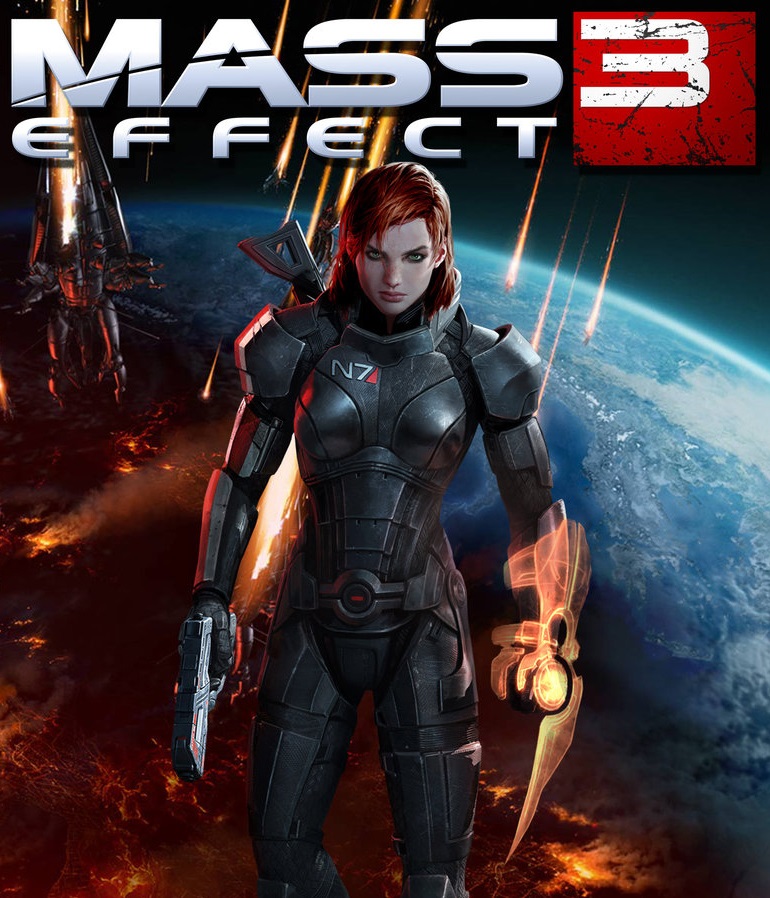
8) Mass Effect 3 (Bioware, 2012)
Subgenre: Action RPG
Played: At least 3 times from 6-13 years ago
Memory of it: Pretty good
As I said before, it is hard to rate each Mass Effect entry as a separate part from the whole. But when I think of the trilogy, the game I think of first is ME3.
If we ignore the final scene of the game, then ME3 is the absolute peak of the trilogy. It was incredible to see character arcs and subplots that I’d been invested in for half a decade concluded in a way that did them justice. I don’t always appreciate blockbuster game experiences as such, but Mass Effect is so damn good at it. It’s as thrilling as it is satisfying. While the combat saw less of an upgrade from ME2 as it did from ME1, ME3 nonetheless has my favorite gunplay in the series.
But now we have to talk about that infamous final scene! I’ve heard two common objections to it. The first, less founded criticism is that your choices up to that point don’t affect the outcome of your final decision. Even without the updated, post-patch ending, I think this is a strange complaint in a game that almost entirely consists of resolving long-running subplots in divergent ways based on three games worth of choices! Mass Effect 3 doesn't need an explicit epilogue to spell things out to you! I’m honestly not sure what else people are asking for here.
But the second critique, the one that I share, is that the Reaper’s motives are finally revealed at the very end and… the answer the game gives us is bad and dumb! The game could have literally left the Reaper’s purpose unexplained and kept them as incomprehensible Lovecraftian horrors, and that would’ve been great! But instead we’re told that galactic civilization always evolves to a point where organic and synthetic life enter conflict, and that genocide at the hands of mechanical life forms is somehow preferable to that? In a game where the player (probably) already negotiated peace between the Quarians and the Geth, thus rendering the question of organic/synthetic conflict null and void? In a game where this reveal had zero set-up, where the Quarian/Geth subplot was previously of equal importance to all the others, but at the last minute, we’re told that this subplot is actually what the three games were about all along? Such a weird decision.
This game would have been perfect if Bioware didn’t drop the ball at the last second. Not bad enough of fumble to ruin the trilogy for me or anything – Mass Effect is still an absolute trip – but it’s still a shame.
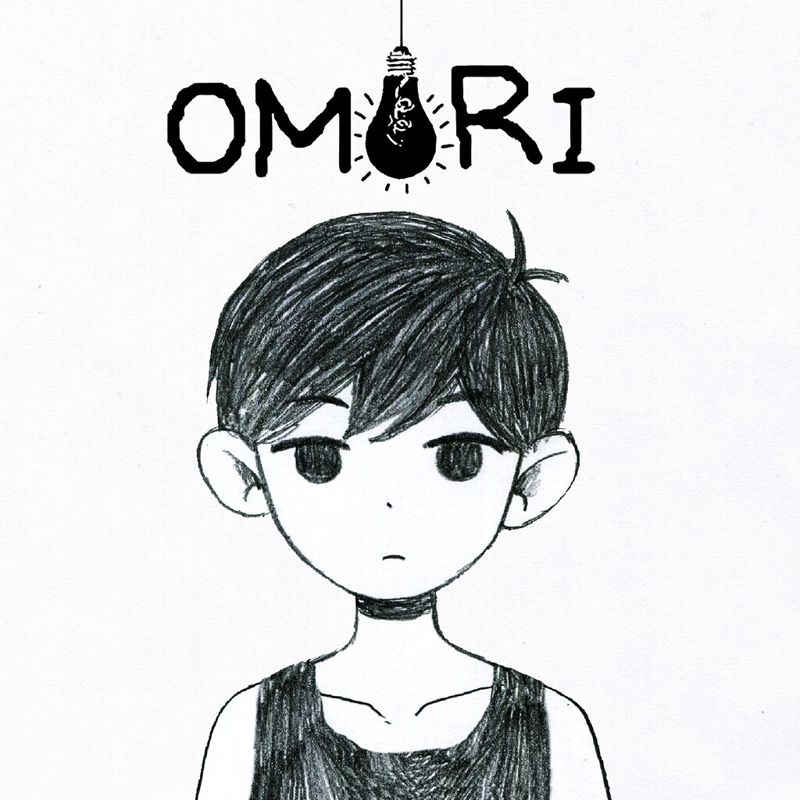
7) Omori (Omocat, 2020)
Subgenre: Turn-based RPG
Played: 3 years ago
Memory of it: Fair
When I first drafted this list, I was surprised by how I instinctively ranked Omori. It originally took my #3 spot! But reflection has brought my evaluation of this game back down to earth.
As I wrote when I originally reviewed the game nearly 3 years ago, I could tell that Omori was someone’s first game, and there are definitely times when the writing feels shallow or immature and the design feels amateurish. That said, you can feel the team’s growth over the course of the game’s six-and-a-half year development period. The game has one of the greatest payoffs of any RPG I’ve ever played – I have never stopped thinking about the ending.
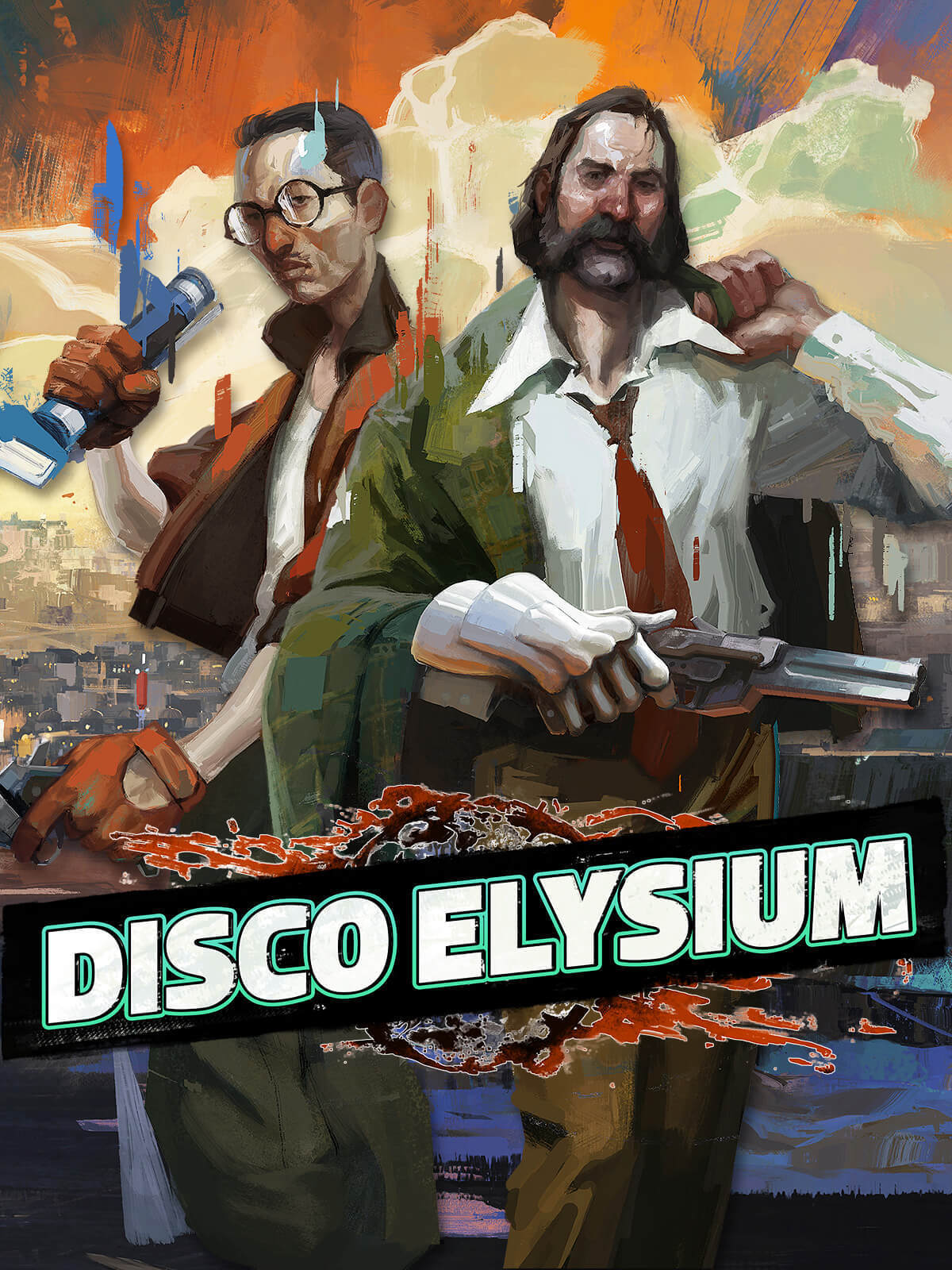
6) Disco Elysium (ZA/UM, 2019)
Subgenre: CRPG
Played: 5 years ago
Memory of it: Pretty good
Disco Elysium was refreshing! Great story, incredible writing. Do you like mysteries? Politics? Psychology? Humor? Fantasy worldbuilding? Drugged-out trainwreck of a protagonist? Disco Elysium’s got it all.
It’s a wonderful example of (mostly) nonviolent roleplaying in a tiny but densely detailed game world. Funny, dark, and weirdly optimistic?
Kim Kitsuragi is great. Poor dude.
I was a little surprised to find Disco Elysium nearly in my top 5, but better than most entries, it just hits that magic combo of doing something unique that I really like and doing it exceptionally well.
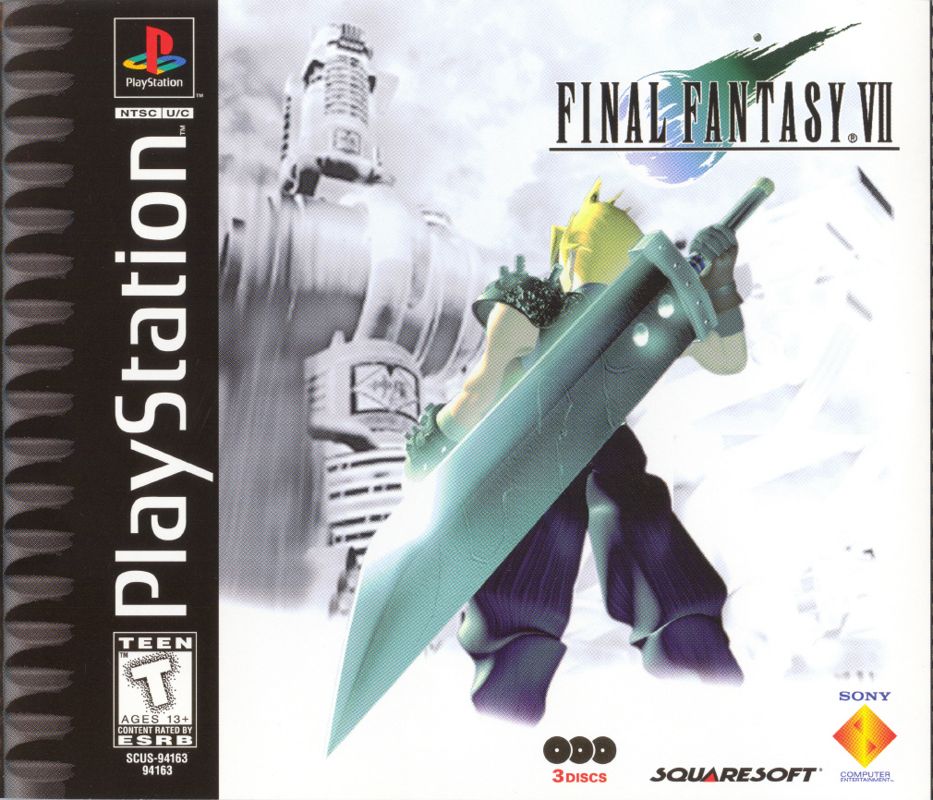
5) Final Fantasy VII (Square, 1997)
Subgenre: JRPG
Played: Twice, ~4 and 12-15 years ago
Memory of it: Fresh enough
I discovered FFVII later than most of my peers who seem to have grown up with it. The earliest I would have played it would have been in the early 2010’s as I was entering adulthood. I was impressed. FFVII rightfully replaced Exit Fate as my point of reference for what a JRPG should be.
Among many things, FFVII is famous for being what many consider to be the first blockbuster AAA videogame (at the time of its release, it had the highest budget of any game to date). I think there’s something about the intersection between the production value of FFVII and the technical limitations of the Playstation 1 that feels awe-inspiring. A modern AAA game with brute-forced photorealistic graphics lacks the magic that FFVII squeezes through its low resolution, low polygon count, prerendered backgrounds, chunky FMVs, and MIDI soundtrack. This game is such a technical accomplishment.
And the game hits us with spectacle in its opening moments. I gush a lot about game endings in this list, but hot damn, is Final Fantasy VII’s opening scene incredible! The quiet orchestral notes that play in the game’s first few seconds as the camera focuses on Aerith before panning out to a stunning view the city of Midgar always get me. The fanfare plays, the camera falls back into another part of the city and focuses on Cloud and his Buster Sword on top of a train before the music transitions seamlessly into the bouncing bassline and dramatic strings and horns of “Bombing Mission.” I know most of you reading either already know this opening by heart or don’t care, but it’s just so good!
FF7’s story of love, loss, and ecoterrorism is timeless. Nobuo Uematsu cooked with this soundtrack. The characters have become cultural touchstones for a reason.
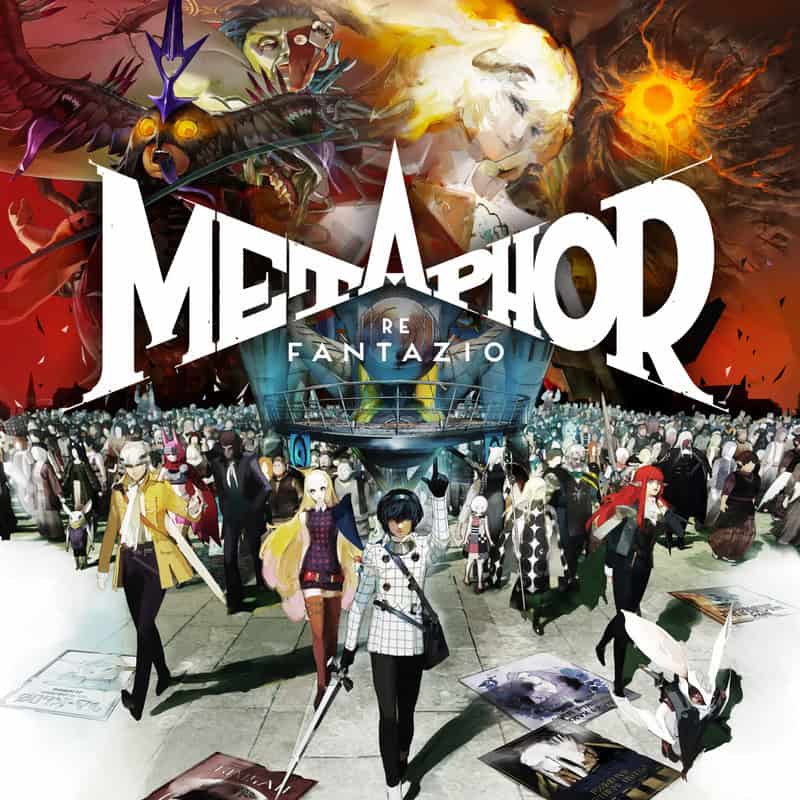
4) Metaphor: ReFantazio (Atlas, 2024)
Subgenre: JRPG
Played: ~4 months ago
Memory of it: Fresh enough
This game impressed me when I played it, sure. It was undisputedly the best game I played last year. But is it really top 5 RPGs of all time good?
If you asked me a month or two ago, I’d probably have placed Metaphor at around 7th position. But the more I think about it, and the more that I talk about it, the more that I like everything about it.
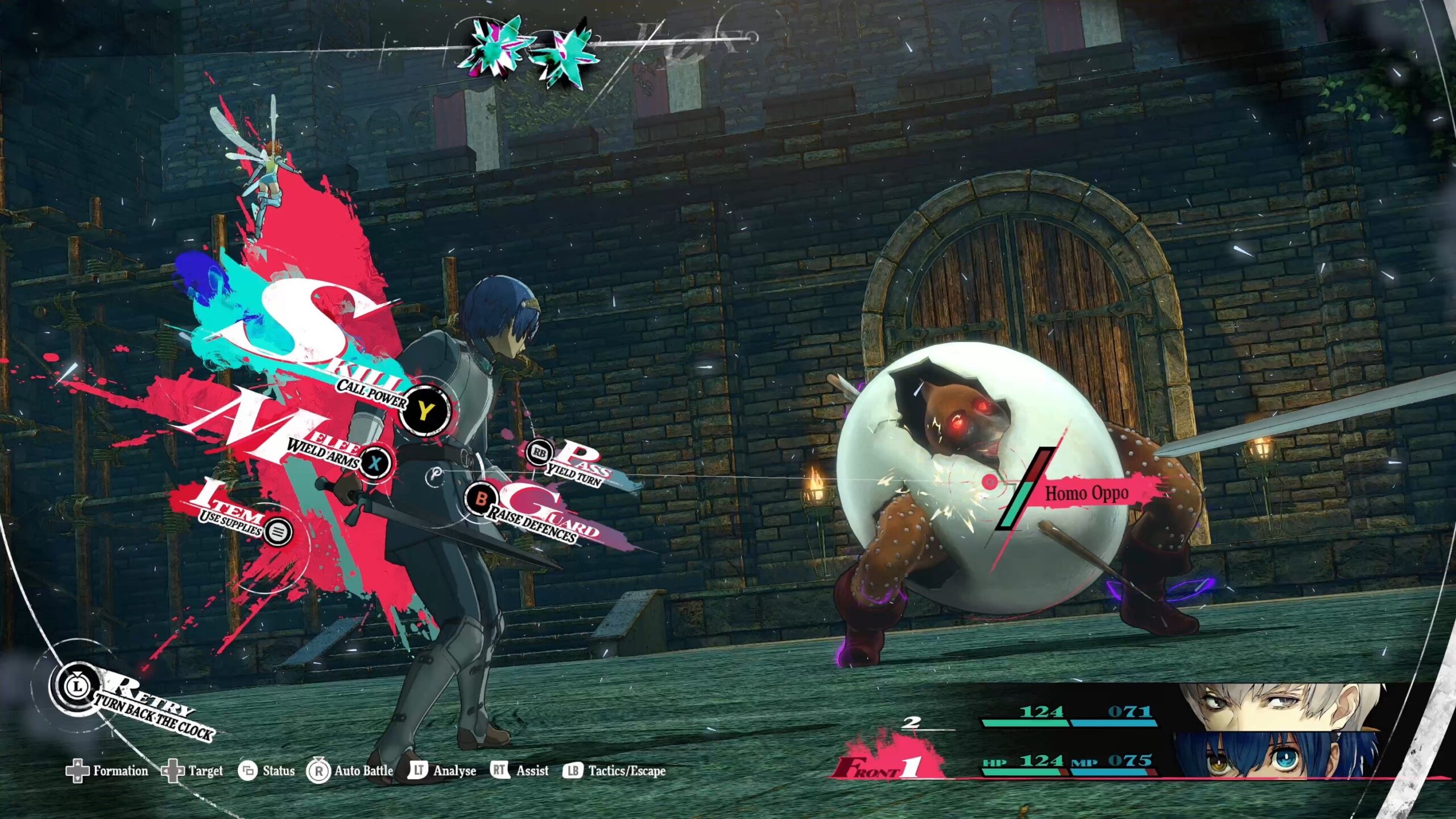
If you listened to Part 2 of the 2025 Sockscast Game of the Year episode, then most of what I’m about to say will sound familiar, but I have almost nothing but positive things to say about Metaphor. Its combat is solid and is easily the smoothest and best-feeling turn-based combat I’ve ever experienced. As is to be expected from Atlas, the art style is gorgeous, and I love the Hieronymous Bosch-inspired monsters. The soundtrack has the pretense of being a generic fantasy videogame soundtrack but nonetheless finds ways to distinguish itself. This is easily my favorite of Atlas’ stories so far. There were twists that had me yelling at my TV screen. I loved the cast, and after a few adventures some of the seemingly dryer party members grew on me (“YOU FACE HULKENBURG!!!”).
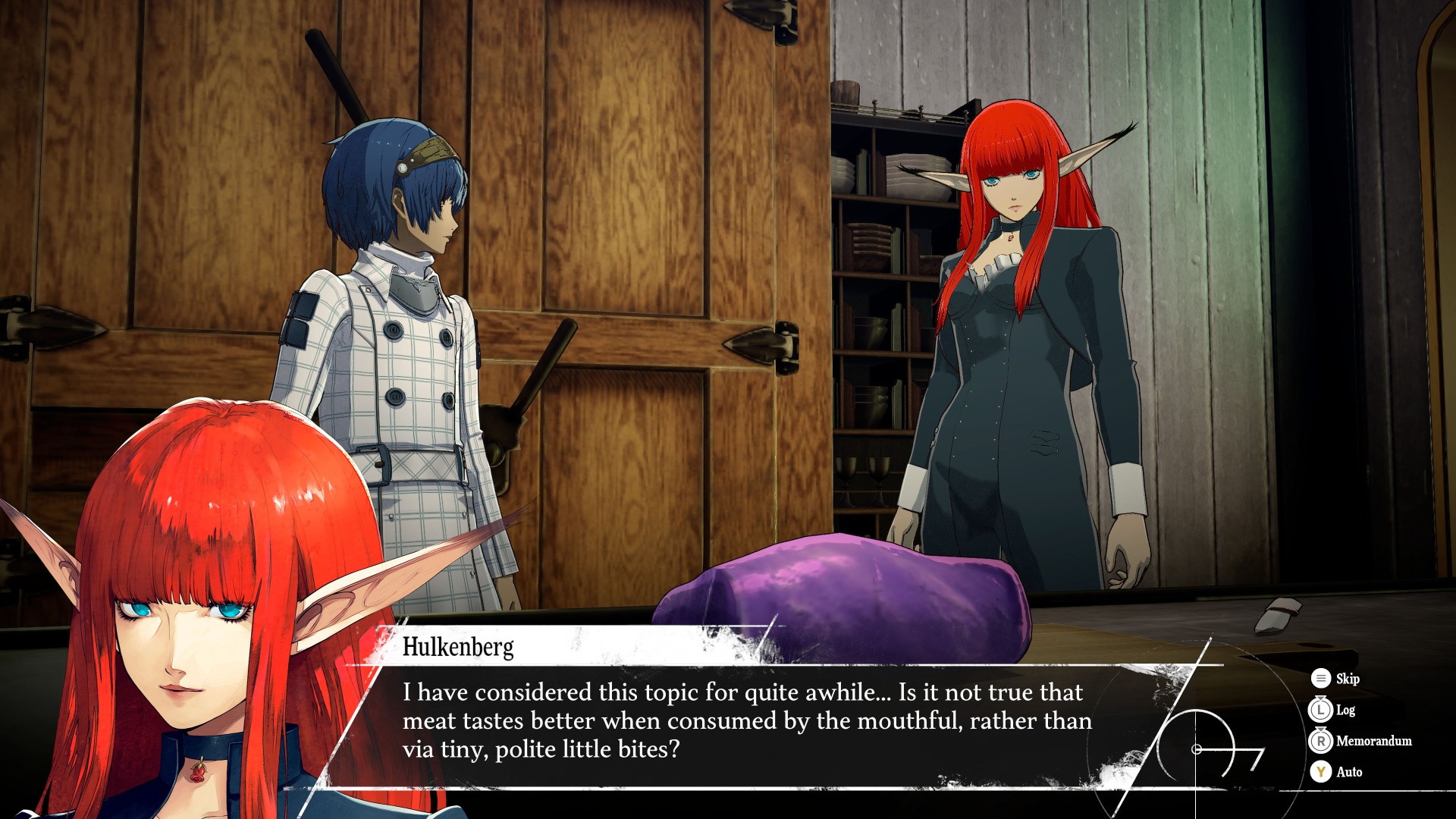
Count Louis is one of the most compelling villains I have encountered in just about anything in recent memory. He’s an evil sociopathic shitbag, don’t get me wrong. But! He is principled, charismatic, clever, and brave. The game is littered with other antagonists of the more common sort (naïve political rivals and cowardly church leaders), so when Louis enters the room you think to yourself, yeah, this is THE GUY. There is a level on which you can draw parallels between him and other populist, disastrous political candidates, but whereas, say, Trump is ideologically inconsistent, cowardly, stupid, and underhanded, Louis is coherent, fair, elegant, talented, and (in many ways) worthy of respect, and that makes him even more terrifying.
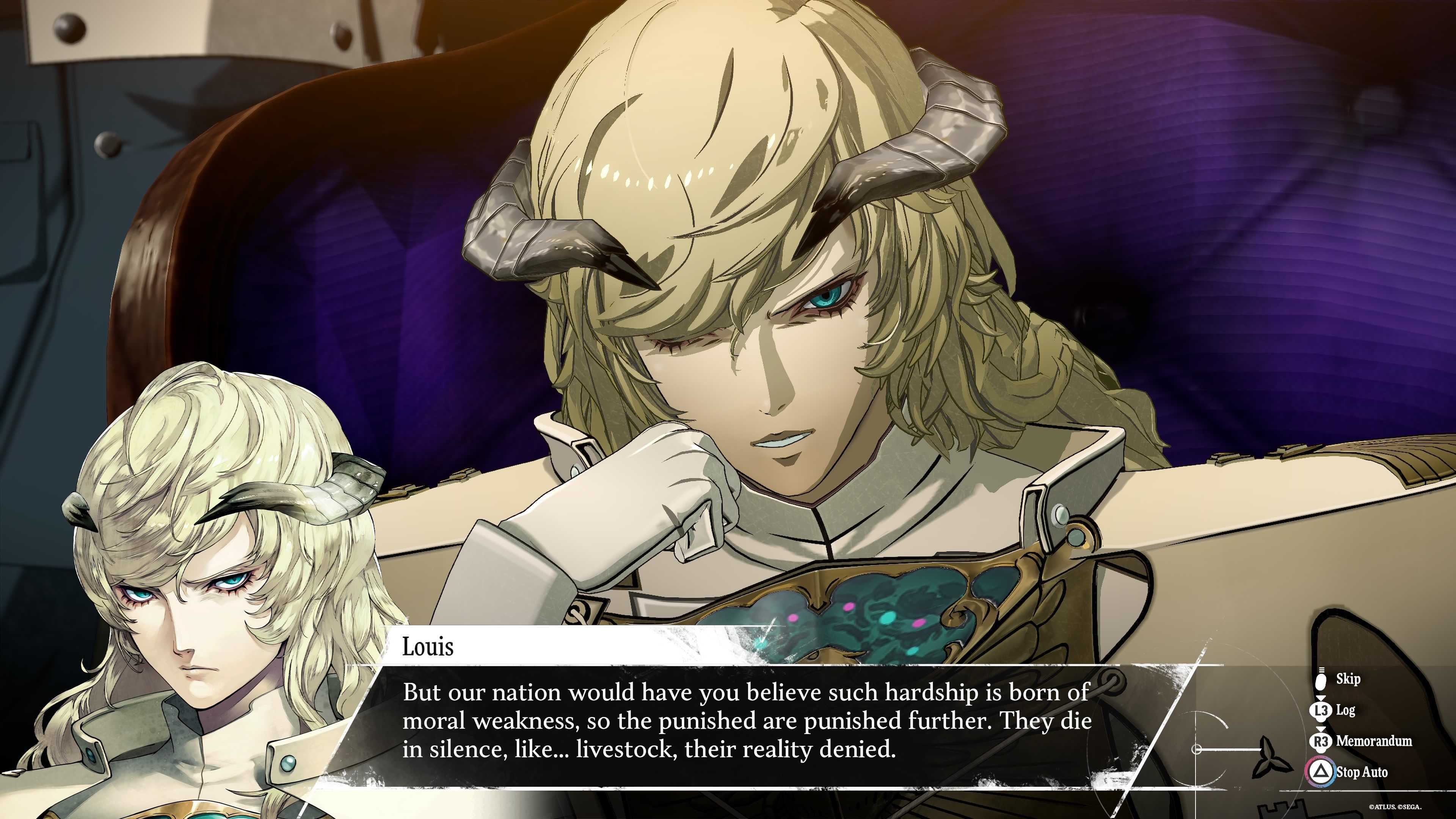
Speaking of Metaphor’s politics: basing an RPG around what is effectively a presidential campaign is a refreshing concept. Some critics have dismissed Metaphor’s theme as simply “racism is bad,” but I think the game is actually deeper than that. If I wanted, I could write an essay about how Louis’ ideal of individual equality is completely in-line with Thomas Hobbes’ misguided understanding of the pre-societal state of nature as brutal, solitary, and violent. While Metaphor’s politics are not revolutionary, I think it is notable for a mainstream game to take unambiguous positions on multiple contemporary political themes, especially at a time when basic liberal and democratic values around the world are being contested.
Metaphor is not only a masterpiece, but it is timely, and it manages to be optimistic without being naïve. It’s rare for a mainstream game to speak so directly to the real-world politics that contextualize it, let alone so fluently. I think that is exactly the kind of art I need right now.
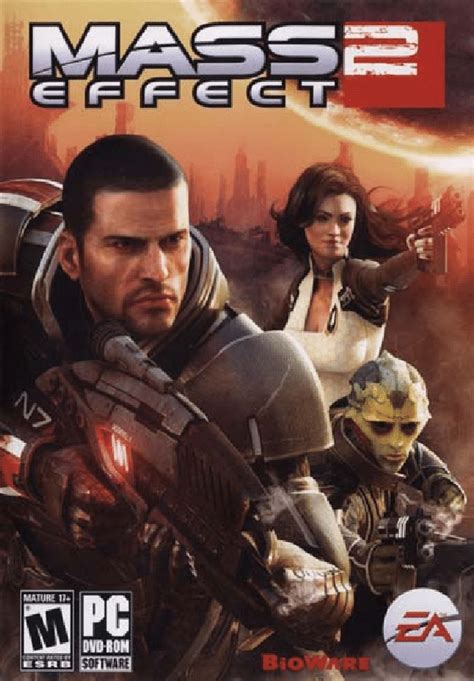
3) Mass Effect 2 (Bioware, 2010)
Subgenre: Action RPG
Played: At least 4 times from 6-15 years ago
Memory of it: Pretty good
(As I’ve said twice already, it is hard to evaluate the Mass Effect games as standalone works. So, unlike my ranking of ME1 and 3, my ranking of ME2 is a stand-in for my ranking of the series as a whole. ME2 is the 6th best RPG I’ve played. The Mass Effect trilogy is the 3rd. Okay? Okay.)
I’m 18-ish and playing Mass Effect 2 for the first time, and I’m running the suicide mission at the end of the game blind. I somehow failed Thane and Samara’s loyalty missions, and for some reason, I sided with Miranda during her confrontation with Jack, meaning I had lost Jack’s loyalty as well (I was a different person back then, apparently? I’ve always sided with Jack since). So my squad’s morale was less than ideal, but with Samara and Jack not really feeling it, neither of my squad’s best Biotics were available. So my squad approaches the seeker swarm, and I need to choose a Biotic to protect the squad with a barrier. Shit.
I choose Miranda. She was genetically engineered to be the perfect Biotic, right? Turns out that isn’t good enough. At the end of the passage, her barrier falters.
The swarm descends upon my squad, and they take Garrus away. He gets no last words. Garrus is gone forever. If you’ve played these games, then you know how devasting this loss was.
My first run of ME2’s infamous suicide mission was an unforgettable bloodbath. I probably lost Samara, Thane, and Legion along the way too. I never had to live with the consequences of my subpar leadership – when ME3 came out, I had started a fresh playthrough of the trilogy and got to play though ME3 with most of the ME2 cast still alive – but even knowing the underpinnings of how the suicide mission determined who lived and who died, it was always heartpounding on subsequent plathroughs. I have never felt safe during that climax. Mass Effect 3 may be the better ride, but Mass Effect 2 nails its landing.
Buying into ME2’s premise requires a massive suspension of disbelief. After the shit Cerberus pulled in ME1, would Shepard and Joker really choose to work with them so readily? I know the writers tried to retcon Joker’s motives in ME3 (“I wasn’t working for Cerberus, I was working for you”), but… it was a retcon! The game begins with your beloved pilot from the first game choosing to work with what are basically evil space Nazis because he was excited about the spaceship they made for him and you are forced to join him for the ride! Bioware could’ve literally just made up a brand-new illicit organization and it would have worked so much better.
But once you get past ME2’s premise, you’re left with the storytelling chops and action that the series is known for, paired with one of the most unforgettablely batshit climaxes in gaming history. I love Mass Effect, and ME2 is the game that defined the series.
2) Undertale (Toby Fox, 2015)
Subgenre: …Turn-based action RPG? Wait, is Undertale more like MMBN than I thought?
Played: 10 years ago
Memory of it: Fair
“Indie video game” is a contested term. Many of us who grew up with or participated in the freeware indie scene in the late 2000’s and early 2010’s have seen what qualifies as a “respectable indie game” become increasingly bigger, more polished, and less experimental throughout the 2010’s. When recounting the history of indie games, those of us from the freeware/hobbyist scene and those outside of it would give largely different lists of important games, but there are a few points where those histories intersect. One of those intersecting games, of course, is Cave Story – a game made by a solo dev in lowercase-indie style, but with uppercase-Indie polish, scale, and mainstream appeal. Undertale is another intersection – a Game Maker game made mostly made by a single person, except this game reached mainstream critical success. Toby feels like one of us, and Undertale feels like the sort of thing that people from the communities I participate in could have made with sufficient time, inspiration, and luck, and I’m glad that this sort of game could become so influential.
Undertale’s reputation precedes itself and I don’t know what to say about it that you probably don’t already know. The soundtrack is legendary, and the humor is exceptional. When I originally reviewed the game back in 2015, I praised it for its emotional breadth and for its emergent storytelling – it is one of the rare games who uses the interactivity of the medium to its fullest to tell a story that cannot be adapted to another medium. It’s a real game’s game.
Ultimately, Undertale feels like the final word on a lot of experimentation we saw at the turn of the 2010’s in the indie scene – pacifist and violent playstyles, save file manipulation, alternative graphics, and irreverent humor all converged into this single game. I don’t know if it’s possible for another game to do now what it did then.
What an absolute creative triumph.
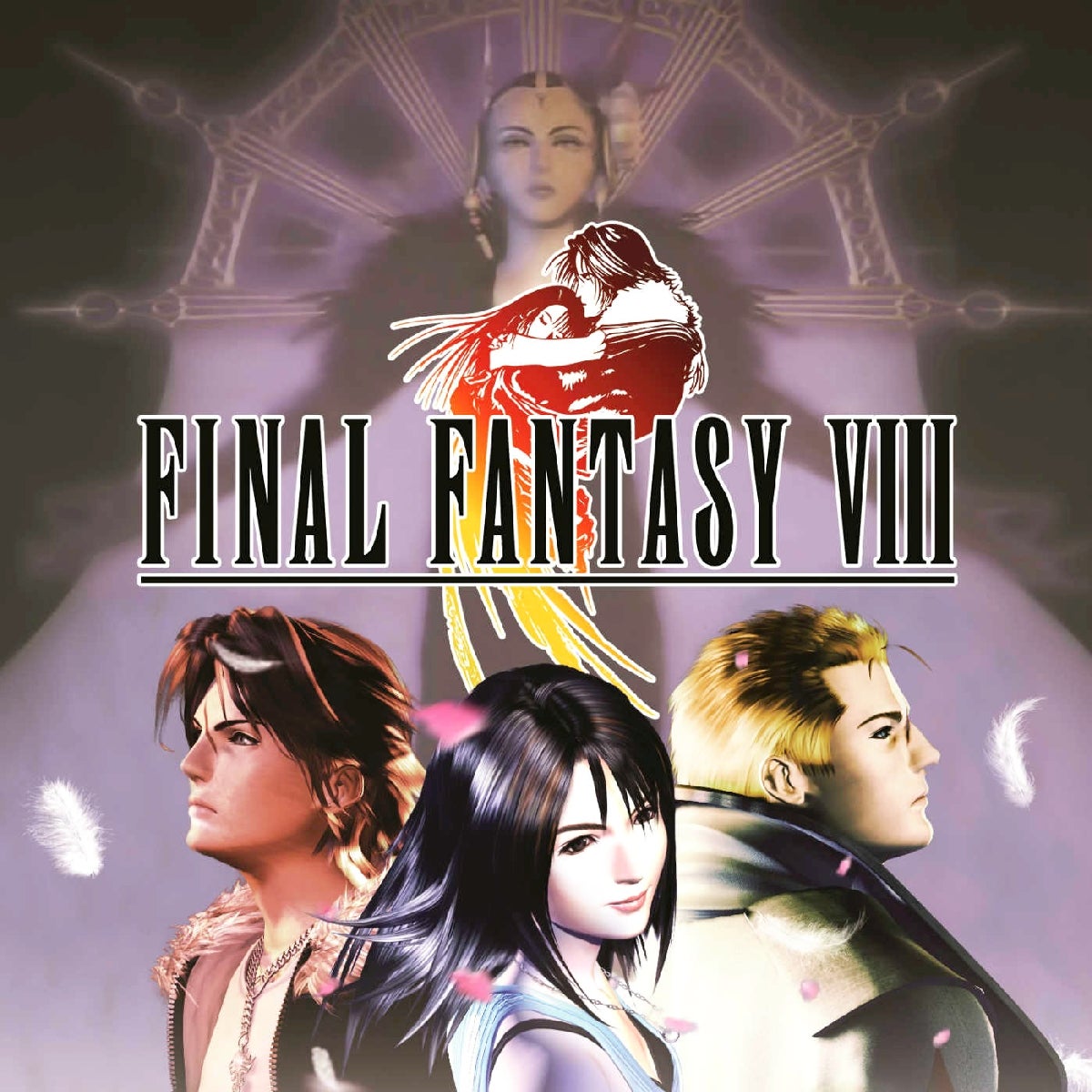
1) Final Fantasy VIII (Square, 1999)
Subgenre: JRPG
Played: At least twice, from 6-15 years ago
Memory of it: Pretty good
Okay, yes, I know, very bold choice for greatest RPG of all time. I know you are probably thinking one of two things:
1) Final Fantasy VIII isn’t good
2) Final Fantasy VIII isn’t that good
I have a good answer to the first objection, which serves as an okay answer to the second. Bear with me.
Is Final Fantasy VIII good? Yes. Obviously. But let me first tell you a story.
Remember when I talked about how I encountered Kingdom Hearts for the first time as a child on a Midwest roadtrip? That wasn’t the only Square game I encountered.
Before stopping in Chicago, my dad and I spent the night at my cousin’s apartment in Columbus, Ohio. I found myself drawn to the Playstation and came across the CD case to Final Fantasy VII. There was a cool dude with a big sword on it, so it had my attention. I didn’t notice that the disk had a different number on it than the case.
So I booted up the game and was a little confused that the game seemed to be about a different guy with a different cool sword. The game’s opening scene was of that cool guy and a girl walking with him through the campus of a school. They seem to know each other well enough that the girl is finishing his sentences for him. I was old enough to recognize that there was subtext but too young to understand what it was. “This is some big kid stuff I’m not ready for yet,” I thought to myself, which wasn’t something I was used to thinking about games, at least not in this way. I knew the gory stuff was off-limits, sure, but I wasn’t used to playing a game that was out of my league on an emotional level.
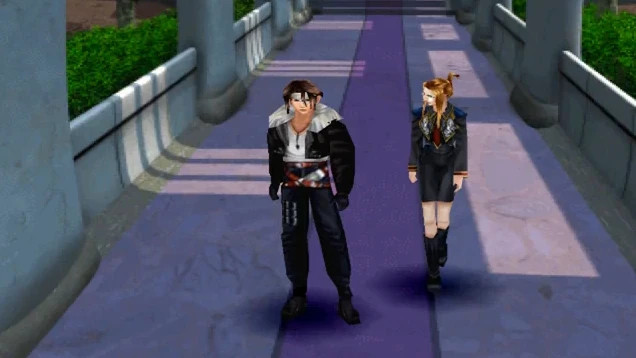
So it was kinda crazy when I played Kingdom Hearts a day or two later, made it to Traverse Town, and the cool gunsword guy appeared again! What were the odds? Anyway…
Years pass, I spend most of my middle and high school years dismissing anime and JRPGs as cringe, get over myself by my late teens, and play Final Fantasy VII as part of my cultural self-education. I had a blast, and so I queue up its immediate follow-up. I finally reencountered the weird game from nearly a decade prior, and this time I was ready for it. Oh my god, I was ready for it.
I was floored.
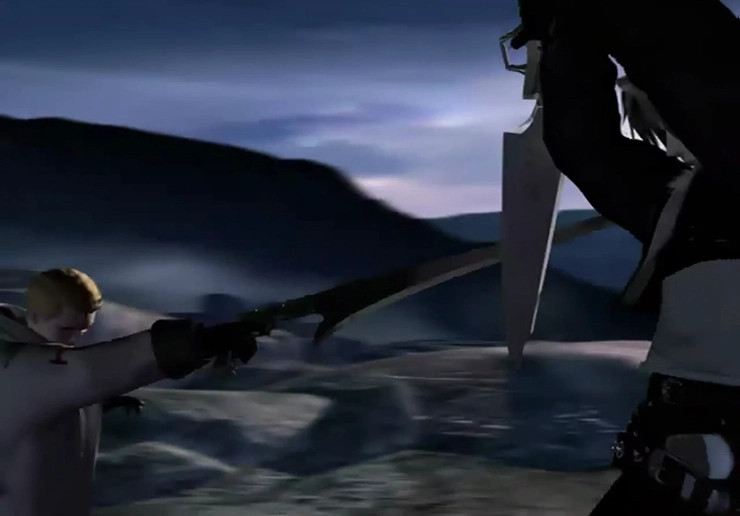
Everything I loved about Final Fantasy VII was there – the emotional storytelling, the gorgeous prerendered backgrounds, another killer sountrack by Nobuo Uematsu (“Liberi Fatali!” “Balamb GARDEN!” “Blue Fields!” “Don't be Afraid!” “Force Your Way!” “Man with the Machine Gun!” “SUCCESSION OF WITCHES!” “Premonition!” “The Legendary Beast!” “The Extreme!”). But it was also a better looking, and at times more spectacular game – as fond as I am for the Popeye-arm character models of FFVII, VIII’s realistically proportioned and detailed character models made the game feel a little more grounded. The battle between the Gardens in the late game was an amazing technical achievement – FFVII had plenty of scenes where a camera moved over a video background with real-time 3D action overlayed on top of it, but FFVIII employed the technique to a greater effect. FFVII had its own strengths, sure, but it felt so obvious to me that Square made a masterpiece in FFVII, learned from it, and then made something even better.
So I was shocked to learn how divisive the opinion around Final Fantasy VIII was.
There are two narratives about Final Fantasy VIII. For most of my adult life, the mainstream narrative has been that FFVIII was always considered an inferior entry in the series because of its godawful junction system and contrived plot (mostly, the orphanage reveal). But game historian Phil Salvador presents a counter-narrative: FFVIII was incredibly well-regarded when it first came out, and it wasn’t until one particularly negative but highly popular Youtube video from 2007 that people began to echo the typical complaints about it that you hear today. Not only do I think he makes a compelling case, but it best explains the discrepancy between the Final Fantasy VIII I actually played and the Final Fantasy VIII that everyone else talks about.
(Phil is also co-editor of the blog ff8isthe.best, which is one of my favorite websites. If you want someone to make a stronger case in FFVIII’s favor than I ever could, or if you just like it when people are passionate about things, then you’ll find the editorial team’s love for FFVIII is absolutely contagious.)
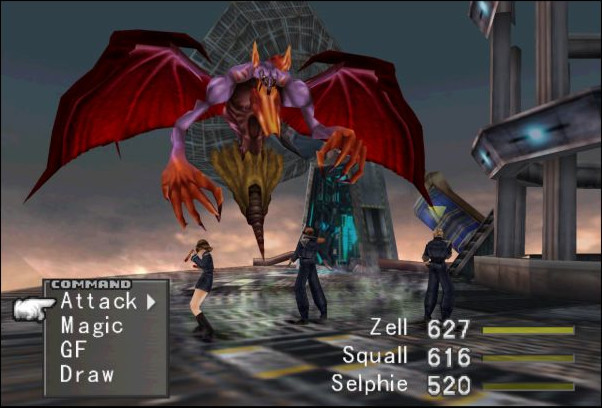
But let’s talk about FFVIII’s flaws. The most common critique is the junction system. I think the junction system does a few neat things that more typical level-up-and-equip systems don’t, but I admit that I don’t think that they’re worth the extra complexity for what is essentially a remix of grind-and-equip-things. But at the end of the day, that’s what the junction system is – you grind encounters for stuff and equip it, just like any other RPG. I wouldn't argue that it’s a system that should be revisited, but it isn’t some huge game design sin. At worst, it’s fine, and at best, it’s a lot of fun to find spells and customize your party members. During my first playthrough, the junction system didn’t click for me until the late game. I spent most of the game floundering around and drawing spells at random, and I still had a great time. During my second playthrough, I knew what I was doing. I drew and equipped spells more optimally, and also had a great time. No matter what, I had a great time.
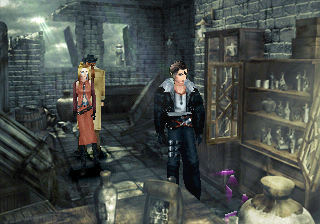
The next most common critique is the orphanage twist – the reveal that all of the cast have suffered memory loss from Guardian Force usage and forgot that they all grew up in the same orphanage. It isn’t set up well, but, like, it’s not any worse than your average JRPG plot twist, is it? So many celebrated classics from the genre have poorly explained, poorly set-up twists. My FFVII superfan partner played through that universally acclaimed classic not understanding why Sephiroth did any of the shit he did in that game (“Was he mind controlled by Jenova, or did he just go insane? Which was it?”). And don’t get me started on the plot weirdness we have to accept in the FFVII Remake trilogy, and critics seem to like those games. Anyone who thinks that FFVIII’s plot is nonsense but doesn’t apply that same standard to just about any other well-regarded JRPG is being selective.
For what it’s worth, I think it’s kinda beautiful that these long lost friends reunite after being distant from each other for so long. On an emotional level I think the twist works real well.
Final Fantasy VIII deserves to be regarded as the masterpiece that it is, and I encourage people to enjoy it on its own terms. Please skip the remaster and play it with the original graphics.
There are other games on this list that I could have chosen for my number 1 slot and had the choice be just as honest. My very first draft of the list had Undertale at number 1. But I looked at it, it felt boring, and more importantly, it felt wrong. When I immediately bumped FFVIII up, that felt right. I stand by that decision – this isn’t a cop-out. There are many correct answers to the question of “best RPG I've ever played,” but after editing this list for nearly a month now, I do think this is my best answer. There were many decisions I've made in this list that were far more difficult.
Honestly, the main reason I feel an extra burden to have to justify FFVIII’s place here is because its reputation has been historically marred, while Undertale, Mass Effect, and FFVII are generally well-regarded. But I’ve already made my position on FFVIII’s reputation clear, so there’s no need for me to belabor the point.
In any case, the competition for the number 1 slot was close, but any version of this list that didn’t have an underrated personal fav at the number 1 slot didn’t feel like my own but instead just a regurgitation of mass opinion. This whole ranked list is as much an attempt at me playing games journalist as it is an examination of my own personal RPG canon and my limited perspective on the genre. I am not a weirdo for going up to bat for Undertale, Mass Effect, or FFVII, but I am a bit of a weirdo for going up to bat for Final Fantasy VIII, and its those deviations from mass opinion that not only make these sort of lists fun, but are what differentiates us from each other as individuals when we engage with art.
Thank you for reading.
APPENDIX A: WHAT I LEARNED ABOUT MYSELF
The most striking thing about this list is how few games from the 20th century are on it. Final Fantasy VII and VIII, Pokemon Gen I and II, Digimon World and Anode/Cathode Tamer… and that’s it! Despite a few attempts, I haven’t actually finished an RPG from before 1996. Having once prided myself on my appreciation for 90s boomer shooters, I was a little shook that I don’t have that same level of firsthand experience of 90s RPGs.
When I think of the consoles I actually had access to growing up, this makes a lot of sense. We had maybe 3 cartridges for an NES that broke when I was very young, and I wouldn’t have a home console again until we inherited a Playstation from one of my dad’s friends in the early 2000’s, and nearly every PS1 game I played was from that friend’s collection. We upgraded to the PS2 shortly thereafter… and that was it! It wasn’t until I moved in with my partner in my mid-20’s when she wanted to buy a PS4 that I would regain access to a home console.
Unlike our NES, our family’s Game Boy was a tank and was a consistent presence in my childhood, but we only ever owned 5 games for it: Super Mario Land 2, Tetris, and Pokemon Red, Blue, and Yellow. We skipped the GBC, but we upgraded to a Game Boy Advance that would turn out to be my last handheld console until I bought a Switch in my late 20’s.
Finally, my dad did tech support and training at non-profits, kept up with computer hardware, and taught me how to upgrade our desktop computer. And, of course, all you needed to play Flash and freeware indie games was an internet connection. So while my time with the PS2 and Game Boy was mostly constrained to my childhood and adolescence, I had been a die-hard PC gamer for most of my life. Computer hardware prices in recent years, sadly, has weaned me off the PC and onto the Switch and Playstation.
So when I think about the reverence and nostalgia my peers have for SNES JRPGs, the fact that I don’t have that same nostalgia makes a lot of sense given that I just didn’t have an SNES in my house! And the lack of agency I had over my diet of PS1 and Gameboy games means that I didn’t have any nostalgia for the 2D JRPGs for those consoles either. I rarely asked to buy new games until I had the GBA and PS2.
I think there were a few “anchor games” from my childhood that have shaped my taste in older RPGs: Pokemon Red and Blue, Megaman Battle Network 3, Digimon World, KotOR, and Kingdom Hearts. Almost any game from the 90’s or early 2000’s that I’ve gone back to an explored as an adult has some connection or similarity to one of those games – otherwise, I think I have a harder time connecting to older games. The unranked DNFs I listed in the intro have a good number of 90's gems that I had a hard time sticking with - Chrono Trigger, Final Fantasy VI, Earthbound, and Planescape Torment. Conversely, early memories of my dad playing Doom on the computer in the attic gave me an early taste for 90's shooters that made it easy for me to fully enjoy Marathon and Quake as an adult.
I always took for granted my jealousy of friends who had more consoles than I did - between the PS2, Gamecube, and Xbox, it seemed like most unambiguously middle class kids whose houses I went to had at least 2 of them. And while I don't want to overlook the class privilege that I did have, I think for the first time I've realized specifically how the specific circumstances of my childhood affected the hardware I had access to and how that shaped my taste accordingly. Hell, going beyond game hardware, you can draw a direct causal line through me not growing up with cable television, watching Fox Kids instead, falling in love with Digimon, finding a used copy of Digimon World, developing an appreciation for 90's PS1 RPGs with prerendered backgrounds, and falling in love with Final Fantasy VIII.
The gender and age of my siblings also shaped my taste. My older brother is 23 years older than me, so I didn't grow up with him, but I did grow up with two older sisters who did play on the family Game Boy (my oldest sister mastered Super Mario Land 2, and, as I mentioned before, my other sister beat the Elite 4 in Pokemon Blue for me). However, with gender norms being what they were, neither of them were marketed to as gamers in the same way I would be as an AMAB kid, and they “outgrew” video games by middle school. So not growing up with older brothers definitely skewed my taste away from older games as well.
APPENDIX B: LISTS BY SERIES/FRANCHISE
If I ranked 4 or more games from a specific series or franchise and you want the quick and dirty of how each entry compares to its fellows, then here you go:
Digimon
- #84) Digimon World: Next Order
- #83) Digimon Adventure: Anode/Cathode Tamer
- #82) Digimon Story (Digimon World DS)
- #81) Digimon World 3
- #80) Digimon World Re:Digitize
- #78) Digimon World 2
- #77) Digimon Adventure (flash)
- #65) Digimon Survive
- #45) Digimon Story: Cyber Sleuth
- #41) Digimon Story: Cyber Sleuth - Hacker's Memory
- #28) Digimon Story: Time Stranger
- #15) Digimon World
Dishonorable DNFs: Digimon Masters, Digimon Story Sunburst/Moonlight
Final Fantasy
- #64) Final Fantasy XIII
- #63) Final Fantasy IX
- #35) Final Fantasy VII Rebirth
- #14) Final Fantasy VII Remake
- #13) Final Fantasy X
- #5) Final Fantasy VII
- #1) Final Fantasy VIII
Honorable DNF: Final Fantasy VI
Megaman Battle Network
- #75) MMBN 4: Red Sun/Blue Moon
- #61) MMBN
- #53) MMBN 5: Team Protoman/Team Colonel
- #42) MMBN 2
- #31) MMBN 6:Cybeast Gregar/Falzar
- #12) MMBN 3:Blue/White
Pokemon
- #69) Gen 6: X/Y
- #68) Gen 3.5: FireRed/LeafGreen
- #62) Gen 3: Ruby/Sapphire
- #60) Gen 4: Platinum
- #59) Gen 8: Sword/Shield
- #54) Gen 5.5: Black 2/White 2
- #38) Gen 8.5: Legends Arceus
- #37) Gen 9: Scarlet/Violet
- #36) Gen 2: Gold/Silver/Crystal
- #34) Gen 7: Sun/Moon
- #32) Gen 5: Black/White
- #10) Gen 1: Red/Blue/Yellow
APPENDIX C: LIST OF INDIE FREEWARE GEMS
Play these!
- #50) The Gray Garden
- #49) Mogeko Castle
- #48) Wadanohara and the Great Blue Sea
- #46) I'm Scared of Girls
- #44) Quantum Entanglement
- #43) Standstill Girl
- #29) Exit Fate
- #17) Space Funeral
- #16) Facets
- #11) OFF
- #9) Embric of Wulfhammer's Castle